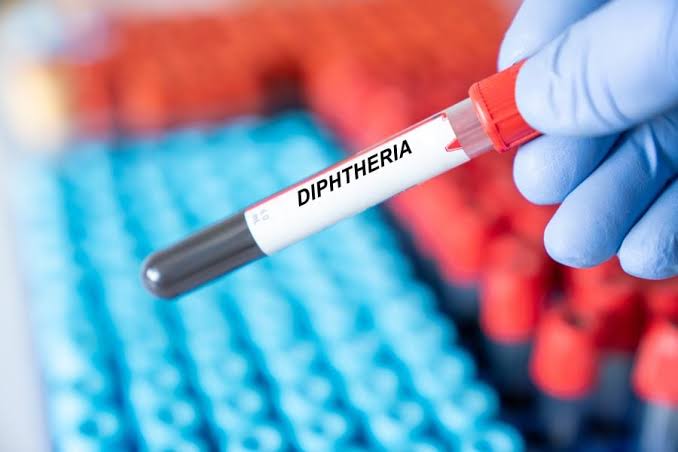
aced with the emergence of diphtheria cases in Morocco, several learned societies, in partnership with the Ministries of Health and National Education, organized a virtual scientific conference on Wednesday, October 7, to review the disease, its diagnosis, and ways to prevent its spread.
The reappearance of diphtheria in Morocco has brought vaccination back to the forefront of public health concerns. At the initiative of the Moroccan Association of Medical Sciences, Infovac Africa, the Moroccan Association of Pediatrics, and the Moroccan Association of Pediatric Infectious Diseases and Vaccination, as well as other learned societies, a scientific meeting was organized on Wednesday, October 7, 2026, in partnership with the Ministries of Health and Social Protection and National Education, Preschool, and Sports.
Attended by nearly 1,000 participants on Zoom, this conference addressed the clinical manifestations of the disease, methods for confirming cases, the management of individuals who have been in contact with infected persons, as well as treatments and preventive measures. The organizers also offered their condolences to the families of the victims.
In their opening remarks, Dr. Moulay Saïd Afif, President of the Moroccan Association of Medical Sciences and Infovac Africa, Dr. Hassan Afailal, President of the Moroccan Association of Pediatrics, and Professor Mohamed Bouskraoui, President of the Moroccan Association of Pediatric Infectious Diseases and Vaccination, emphasized the importance of collective action to protect public health and combat misinformation.
Checking Children’s Vaccination Status
Dr. Mohamed El Youbi, Director of the Epidemiology and Disease Control Department at the Ministry of Health, reiterated that insufficient vaccination contributes to the resurgence of diseases such as measles and diphtheria. He urged families to check their children’s vaccination records and ensure that all scheduled doses, including boosters, have been administered.
The speakers also emphasized the need to preserve the achievements of the National Immunization Program, recalling the measles outbreaks recorded in recent years.
From the Ministry of National Education, Mustapha Yaacoubi, Director General of School Life Organization, indicated that a circular had been sent to schools to strengthen surveillance, expedite the reporting of suspected cases, and verify students’ vaccination status. Children exhibiting symptoms should be referred to the appropriate medical services.
Strengthening Surveillance and Communication
The meeting also provided an opportunity to present the main steps in the diagnosis and surveillance of diphtheria. Professor Mohamed Bouskraoui discussed the clinical manifestations of the disease, while Nabila Sraâ, a microbiology specialist in Marrakech, explained the methods for confirming cases. Dr. Fatiha Samihrou presented the mechanisms for epidemiological surveillance in Morocco, and Dr. Mouad El Morabit, coordinator of the National Center for Public Health Emergency Operations, detailed the management of people who have been in contact with an infected person. Finally, Dr. Mohamed Benazzouz, head of the National Immunization Program, addressed the vaccination response to be adopted.
Among the proposals put forward was the strengthening of vaccination in schools, similar to the measures deployed in 2023 in response to measles outbreaks. Participants also suggested integrating students’ vaccination status into their national Massar identification number, in order to identify delays and contact the families concerned.
The role of the media in disseminating reliable information was also highlighted during a discussion between journalists Kenza Khatla from the website “Media24,” Aziza Ghoulam from the daily newspaper “Assahra Al Maghribia,” and Wahid Mbarek, head of the social affairs section of the newspaper “Al Ittihad Al Ichtiraki.”
Following the meeting, participants called for strengthened coordination between health authorities, schools, learned societies, and the media. They also commended the Ministry of the Interior’s contribution to public health efforts. The goal is to consolidate vaccination coverage, better inform the public, and prevent the resurgence of vaccine-preventable diseases.
Related articles
The House of Representatives is holding a plenary session on Tuesday dedicated to the election of its Speaker.
Rabat – The House of Representatives is holding a plenary session on Tuesday dedicated to the election of…

Thunderstorms, Hail, and Wind Gusts Expected Friday in Several Moroccan Provinces
Rabat – Heavy thunderstorms with hail and wind gusts are expected Friday in several Moroccan provinces, the General…

HM the King Delivers Speech to Parliament at Opening of 1st Session of 1st Legislative Year of 12th Legislature
Rabat – His Majesty King Mohammed VI, may God assist Him, accompanied by HRH Crown Prince Moulay El…