
Over the last few months, there has been a series of events in Morocco that have sparked a vigorous debate over cultural and social issues – and civil society activism on both sides – in a country widely known for its moderate approach to Islam and its embrace of diversity. It has certainly been an interesting few months in Morocco, with civil society using increased political space (the result of decades of reform) to air longstanding social and cultural questions.
The most recent development is today’s verdict in Fez in the case of two men accused of beating up a man they alleged was homosexual. The two men tried for assault were convicted, sentenced to four months in jail, and each required to pay a fine of 500 dirhams. Both the trial itself and the ruling appearto be part of a steadfast commitment on the part of the government to uphold the rule of law.
Another instance, just last month, was the much-publicized case of two women in Inezgane who were arrested for public indecency for wearing dresses. In response, protestors took to the streets in Rabat in support of the two women, hundreds of lawyers registered to defend them, and #porterunerobenespasunecrime (wearing a dress is not a crime) trended on Twitter. The women were ultimately cleared of any wrongdoing in what the chief defense lawyer called “a victory not only for these two women, but for all members of civil society who mobilized.”
And in March of this year, after societal consultations led by the National Human Rights Council, King Mohammed VI ordered that laws restricting abortion be loosened in the cases of rape and incest – an issue that likewise finds a diverse range of opinions in the Kingdom. (Notably, this isn’t the first time the King has sought to deftly navigate public opinion on a “divisive” issue in order to promote women’s rights – the 2004 reform of the family code was adopted in spite of Islamist opposition.)
One might look at these several cases and wonder where the country is headed, and whether it’s going in the right direction – if there even is one. This is as open to debate as questions of “morality” currently being discussed in the Kingdom.
There is no blueprint for navigating social change, nor is there only one right way to evaluate progress on cultural and social issues without attention to the mores and societal environment of any given place. Morocco is engaged in a delicate balancing act between tradition and modernity, working, as it has for many years, to achieve compromise and stability in a society with competing views – traditional, modern, and everywhere in between.
The important thing is that Morocco is having this open debate – and as is the case with a number of issues (reform, decentralization, etc.), it is one of the only countries in the region doing so. It is certainly an evolving experiment, but with government and civil society engaged, the country will find its own path forward. As it always has.

Related articles
Casablanca: Pulmonary Hypertension Management Focused on Conference
Casablanca – The establishment in Morocco of a specialized pathway for the diagnosis and management of chronic thromboembolic…

Thunderstorms with hail and strong winds expected Friday in several provinces of the Kingdom (Alert Bulletin)
Rabat – Thunderstorms with hail and strong winds are expected Friday in several provinces of the Kingdom, according…
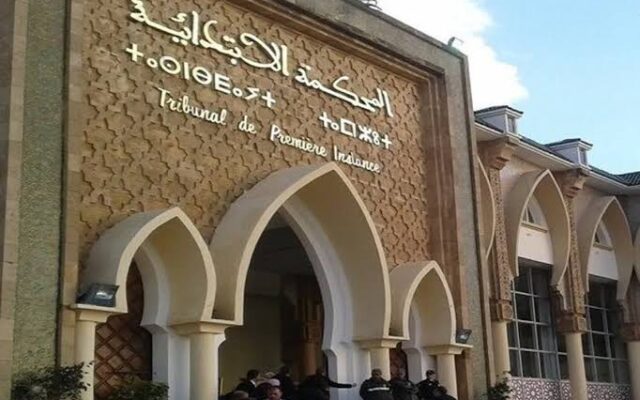
Justice: Nearly 19,000 Lawyers Resume Practices, Several Trials Restarted After Four-Month Suspension
Morocco’s approximately 19,000 lawyers provisionally resumed their professional activities on Wednesday, October 7, after a four-month suspension in…
1 comment
Join the conversation on this story.
Interesting opinion.
As an American Muslim writer spending more time in Morocco now, I find the promotion of “cultural transformations” to be off-putting.
Why do Muslims in Islamic countries have to transform their values for others? Every society has a moral compass and Muslim’s moral bearings are high.
In the case of the homosexual beating, I would not promote any one being beaten for being gay. But walking around promoting such behavior or soliciting could get a man or women killed in the Islamic World. Muslims do not tolerate sodomy and have no desire to have it “normalized” as part of society. I left Hell’s Kitchen in NYC where men walk around kissing and fondling each other in public. I came to Morocco to be away from such filthy public behavior which will never be tolerated in the Islamic World. And if you noticed, even “liberal” Morocco is becoming more and more intolerant to these “modern” values.
The women wearing dresses? How short were these dresses? Muslims moral values accommodate modesty in dress for men and women. A provocatively dressed man or woman may get a negative reaction. If you are from Europe, you should respect these values and dress accordingly. When in Rome, do as the Romans. When in the Muslim world, at least, have some respect for yourself.
And you are so happy these abortion rights are being upheld. Does everyone on earth have to cheer at the sucking of a fetus out of a woman’s womb?
Muslim moral values are the same that your ancestors maintained. Those moral values built Western Civilization as well as the Islamic World. As the West moves to “modernity” it should respect and tolerate the moral values of Muslims or live silently in their own moral decrepitude.
Barrett Bilali