Rabat – The High Commission for Former Resistance Fighters and Former Members of the Liberation Army (HCAR) affirmed that the commemoration of the 51st anniversary of the glorious Green March is being celebrated amidst strong mobilization in support of consolidating Moroccan identity in the Sahara based on the autonomy initiative.
The celebration of this anniversary serves as a reminder of the stages of a peaceful and popular march that led to the recovery of the Moroccan Sahara, strengthening the attachment of its inhabitants to their Moroccan identity and to the sacred principles of the nation, within the framework of the historical ties of allegiance between the inhabitants of the Sahara and the Kings of the Alaouite Dynasty, according to a statement from the High Commission.
In the context of the celebration of the first anniversary of Unity Day, marked by a national consensus around the unchanging constants of the Nation, the family of the Resistance and the Liberation Army joins the Moroccan people, from Tangier to Lagouira, to commemorate on Friday one of the most precious memories in the process of completing national independence and restoring the territorial integrity of the Kingdom.
“This is the 51st anniversary of the glorious Green March, initiated thanks to the genius of the unifying King, the late His Majesty Hassan II, may God rest his soul, and in which crowds of volunteers from all categories and strata of Moroccan society participated, as well as delegations from many brotherly and friendly countries,” recalls the High Commission.
On this day in 1975, thousands of volunteers set out, in an orderly and disciplined manner, towards the provinces of the Moroccan Sahara to liberate them from the yoke of Spanish colonialism, with the strength of their faith and according to a unique, peaceful, and civilized approach, the High Commission for Reconciliation and Peace (HCAR) continued.
This action demonstrated to the world the perseverance of the Moroccan people, their unwavering will to reclaim their stolen rights, and their determination to end the foreign presence and colonial domination, thanks to their legendary cohesion, the same source added.
The Green March, the statement explained, “achieved its objectives and broke down the artificial barriers between the sons of the same nation, armed with the Holy Quran, the defense of the national territory, and a commitment to the values of peace and justice, with a view to recovering and preserving their stolen rights.”
The text notes that the Green March demonstrated to the world, with concrete evidence, the degree of cohesion embodied by the genius of a resilient King and the bravery of a loyal people, as well as the determination of all Moroccans, from south to north, to complete their national independence and achieve territorial unity.
Driven by faith in the righteousness of their cause and their mobilization to defend their religious traditions and national values, Moroccans thus provided proof of their commitment to defending their country, motivated by the firm will to achieve the unity that the colonizer had attempted to undermine, until justice was served and the reunion of the sons of the same nation, from north to south and from east to west, was sealed, the High Commission states.
He recalls that Morocco made enormous sacrifices to confront the foreign occupation that weighed upon its national territory for nearly half a century, dividing the country into zones of influence: the French protectorate in the center, the Spanish protectorate in the north, and the colonial presence in the southern provinces of the Kingdom, while the Tangier region remained under international administration.
This fragmentation made the mission of liberating the national territory difficult and arduous, requiring the Throne and the people to make enormous sacrifices in a continuous and multifaceted struggle, culminating in the triumph and victorious return from exile on November 16, 1955, of His Majesty King Mohammed V and the Royal Family, bearing the banner of freedom, independence, and national sovereignty, to embark on the “great jihad”—the building of a new, emerging, and prosperous Morocco.
The end of the protectorate era was merely the beginning of a major economic and social jihad to build the nation, one of the first priorities of which was the liberation of the Kingdom’s remaining territories.
It was within this context that the Liberation Army launched its operations in the southern provinces in 1956, aiming to complete the independence of the still-occupied parts of the national territory, the statement clarifies.
Related articles
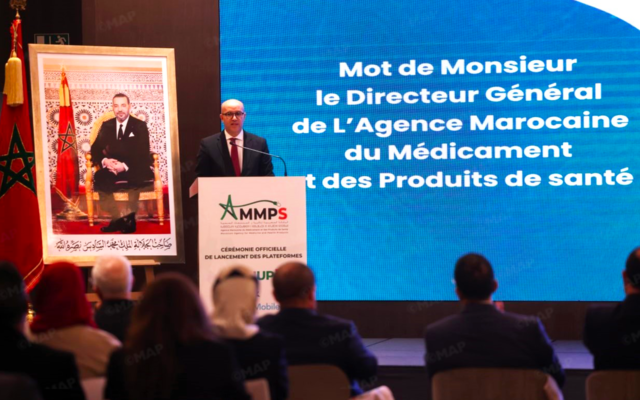
Official Launch of VigiMobile and VigiUp Platforms to Strengthen the National Health Surveillance System
Rabat – The Moroccan Agency for Medicines and Health Products (AMMPS) officially launched VigiMobile and VigiUp on Wednesday…
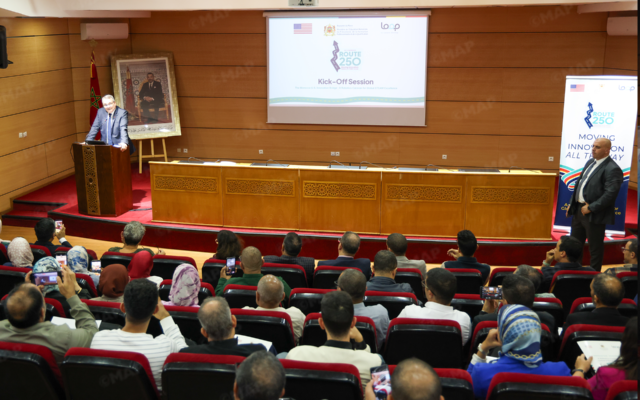
Launch of the National Training Caravan in AI and Educational Robotics
Rabat – The National Training Caravan in Artificial Intelligence (AI) and Educational Robotics was launched Tuesday in Rabat,…
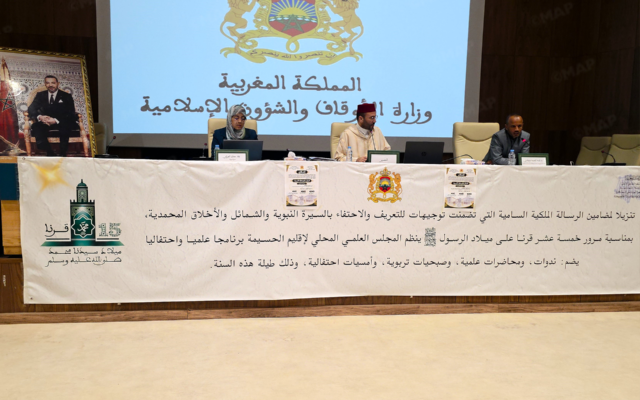
Training Session on Family Reconciliation and Mediation
Al Hoceima – The Al Hoceima Local Council of Ulema organized a training session on family reconciliation and…