
Morocco’s recent involvements in West African religious affairs — as in the case of Mali, ostensibly to promote tolerance and participate in the country’s “physical and spiritual reconstruction” — are better interpreted as a new foreign policy strategy in West Africa. Morocco is, in fact, increasing its religious collaborations as a means towards taking a stronger leadership role in regional security matters.
Until recently, the Moroccan monarchy’s management of religious affairs had been primarily focused internally. The Moroccan monarchy has long regulated religion in order to shape a distinctly Moroccan form of Islam. The present king’s father, Hassan II, had built a new institution of Islamic higher learning, Dar al-Hadith al-Hassaniya, in 1975 in the capital city of Rabat to compete with the historically rebellious and influential Qarawiyyin University in Fez.
A terrorist attack in Casablanca in 2003, which targeted Jewish and European sites and killed thirty-three civilians, was the impetus for a host of reforms that strengthened state control of Islamic institutions. Referencing the War on Terror, the monarchy called for a number of religious reforms, including tightening its control over Moroccan Islam. The monarchy defended these reforms as a means to prevent the inculcation of extremist ideas through politicized modes of Islamic education.
These reforms included changes to councils for religious scholars as well as reforms to the religious education curriculum for the public schools. The Ministry of Islamic Affairs installed flat screen TVs in mosques to broadcast the state’s religious programming, created the first positions of female Islamic authority (murshidat) in the Arab world, and incorporated (male) Imams into the state’s religious bureaucracy. Taken together, these actions can largely be summarized as a process of bureaucratizing religious authority in order to monitor and control it.
Recently, Morocco began to project this policy of religious regulation externally; first taking advantage of the opportunity created by a 2012 coup that plunged Mali into conflict and instability. Although Morocco’s role during Mali’s 2012-2013 civil war was limited, it publicly expressed support for the French intervention against jihadist groups in early 2013, and increased its involvement in Mali following the restoration of the country’s territorial integrity.
In late September 2013, this increased cooperation was formalized in an agreement signed by the Moroccan Minister for Islamic Affairs Ahmed Toufik and the Malian Minister for Territorial Administration Moussa Sinko Coulibaly. In the agreement, reportedly a response to Malian requests for assistance, the Moroccan government agreed to train 500 Malian Imams at Moroccan institutions of higher learning.
The training, which began when 90 Malian Imams arrived in Morocco last November, was expected to be broad and include subjects such as Malian history, geography and institutions in addition to human rights, media and religious topics.
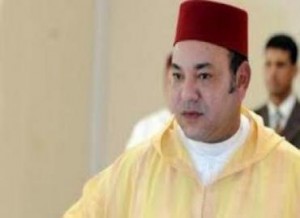
At the investiture ceremony for Mali’s new president, Ibrahim Boubcar Keita, on September 20, 2013, the Moroccan King Muhammad VI, discussed the agreement : “Any co-ordinated international action which does not attach the necessary importance to cultural and religious aspects will be doomed to failure.”
His statement echoed the rhetoric he used to defend his response to domestic terrorism in 2004 — suggesting that efforts to counter terrorism that do not include spiritual renewal cannot succeed. By referencing “coordinated international action” the comment explicitly tied the king’s policy of religious regulation to regional efforts on security.
The Moroccan King’s influence over religious affairs in the region was further institutionalized with the signing of a religious affairs cooperation agreement with Mali on November 20, 2013. The agreement focused on collaboration in both the fight against religious extremism and the promotion of a tolerant Islam. The agreement is expected to result in a number of future meetings attended by both countries where issues of mutual concern will be discussed.
Mali’s warm reception of Morocco’s policy of projecting religious leadership can be largely explained by the widespread perception that religious practice in Morocco and in West Africa is similar. Muslims from Morocco, West Africa and the Sahel follow the Maliki school of Islamic law, which accommodates a range of religious interpretations including Sufism or Islamic mysticism.
Additionally, West African Muslims have tremendous respect for the Moroccan monarch, who claims descent from the prophet Muhammad. Mosques across West Africa already offer Friday prayers in his name as a show of respect for his position of religious leadership. Beyond respect for the king, members of the most powerful Sufi brotherhood in Senegal, the Tijaniyya, visit the tomb of the brotherhood’s founder, Si Ahmed Tijani, which is located in Fez, on their way to Hajj. Such pilgrimages form the foundation for a network of relationships between West African and Moroccan religious leaders.
Related articles
AU-UN: Morocco Voices AU Peace and Security Council’s Position on “Youth, Peace and Security” at 11th Joint Seminar with UN Security Council
United Nations (New York) – The Kingdom of Morocco served, on Thursday in New York, as the lead…
Moroccan Entrepreneur Wins ‘Mattei Plan Africa Award’ in Rome for Audiovisual Work
Rome – Moroccan entrepreneur Abderrahim Naji won the “Mattei Plan Africa Award” in Rome for his audiovisual work…
His Majesty the King congratulates the national futsal team on their victory at the 2026 Africa Cup of Nations.
His Majesty King Mohammed VI, may God assist him, sent a message of congratulations to the members of…