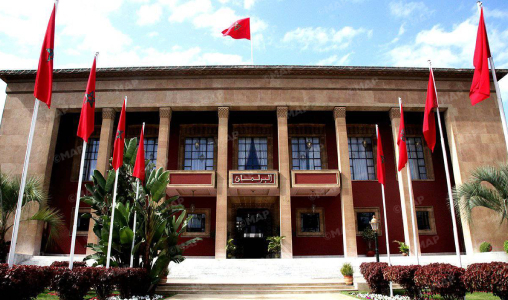
Rabat – The first session of the twelfth legislature opens tomorrow, Friday, in a context marked by political, economic, and social challenges that make this session the starting point for an immediate commitment to a renewed dynamic of action.
This autumn session is taking place amidst ongoing consultations for the formation of the new government following the parliamentary elections of September 23, which are expected to reshape the political landscape of the House of Representatives. This session will also be marked by the election of the Speaker of the House and the establishment of its governing bodies and structures.
In this regard, the nation’s representatives, from both the majority and the opposition, will be called upon more than ever to actively participate in the development of public policies, particularly those related to managing macroeconomic balances and strengthening the foundations of the welfare state, through rigorous monitoring of the implementation of major projects and the proposal of effective alternatives.
The 2027 budget bill is expected to be the first major test for the new parliamentary structure, given its importance in determining key economic and social choices, particularly in an international context marked by increasing economic uncertainty and volatility.
In this regard, Abdelaziz Karaki, a professor of political science at Mohammed V University in Rabat, stated that economic and social priorities will constitute the “real test” for the lower house. Once its internal structures are finalized and its parliamentary groups and committees are formed, the House of Representatives will immediately begin examining the new budget bill. This will include studying public spending and ways to ensure that the greatest possible number of citizens benefit from it.
In a statement to the Arab Maghreb News Agency, he added that the expected role of the legislative branch during its autumn session and beyond should extend to addressing structural issues, particularly the challenge of professional integration and reducing disparities between different regions. This will be achieved through the optimal activation of oversight mechanisms to ensure a fair distribution of the benefits of development.
The university professor emphasized the crucial role of spatial justice in reducing regional disparities, stressing the importance of Parliament’s role in overseeing the allocation of public investments among different regions and communities, as well as the need for close monitoring of the situation in rural areas, mountainous regions, oases, and rural centers.
Mr. Karaki also stated that the issue of employment and integration of young people, particularly university graduates, should be a top priority for the new House of Representatives, underscoring the need to complete the establishment of the foundations of a welfare state. In this regard, he called for revitalizing parliamentary diplomacy and strengthening communication with foreign parliaments.
Furthermore, the professor indicated that the House of Representatives will be expected to operate according to a new approach that takes into account the Kingdom’s priorities and strategic directions.
In this regard, Mr. Karaki emphasized the importance for parliamentarians to present high-quality initiatives and proposals that make parliamentary work more appealing to citizens. He stressed the need to “move beyond the logic of ex-post control and usher in a new phase where Parliament becomes an evaluation institution, thereby ensuring better representation of society and restoring trust in political action in general.”
The main challenge of this new legislative term remains consolidating the central role of the parliamentary institution in driving comprehensive and multidimensional development. To achieve this, it is necessary to improve the effectiveness of legislative and oversight functions and to ensure that parliamentary initiatives respond concretely and effectively to citizens’ expectations and aspirations.
Related articles
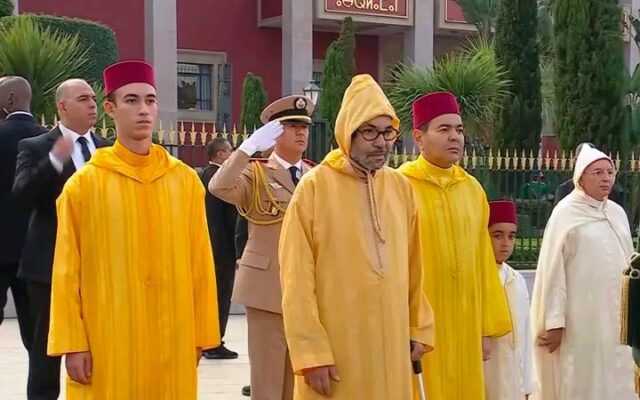
HM the King Delivers Speech to Parliament at Opening of 1st Session of 1st Legislative Year of 12th Legislature
Rabat – His Majesty King Mohammed VI, may God assist Him, accompanied by HRH Crown Prince Moulay El…
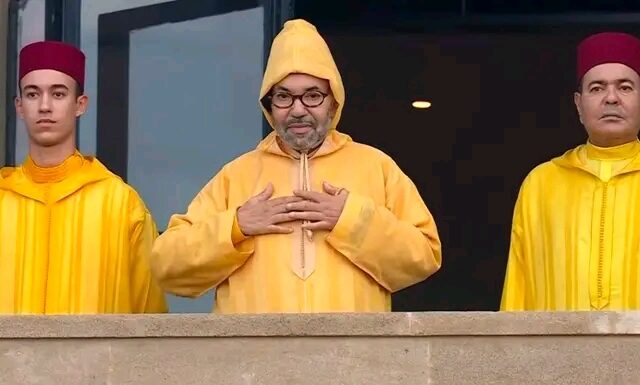
A Vision for Renewal: King Mohammed VI Sets Parliament’s Strategic Course for the 12th Legislative Term
RABAT — In an address marking the state opening of the first session of the first legislative year…
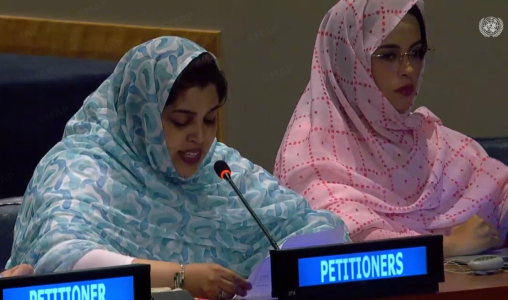
At the UN, elected representatives from the Moroccan Sahara highlight democratic growth and the dynamic development of the Southern Provinces
United Nations (New York) – Elected representatives from the Kingdom’s Southern Provinces addressed the Fourth Committee of the…