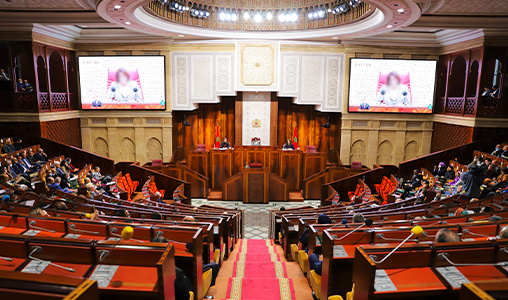
Rabat – Following Morocco’s parliamentary elections, the new composition of the Lower House now features a strong female presence, with 107 women MPs out of a total of 395 seats, representing nearly 27.1% of all members of the House, including 15 women parliamentarians with previous experience in the chamber.
This increase, compared with the 96 women parliamentarians in the previous legislature, comes alongside a notable rise in the number of women elected in local constituencies, from six MPs in 2021 to 17 in the latest election, in addition to 90 women MPs elected on regional lists.
The growing presence of women within the legislative institution also raises the question of the quality of this presence and its effective contribution to parliamentary work, whether through the exercise of constitutional powers or access to positions of responsibility within the House, its Bureau, as well as the presidencies of committees and parliamentary groups.
For political science and constitutional law researcher Karima Gharrad told MAP that this progress reflects a firmly established conviction regarding the need for women to be present on the political scene, stressing, however, that assessing this dynamic cannot be limited to the number of women parliamentarians, but also extends to their presence within the structures of the House of Representatives along with their effective participation in the legislative process and oversight of government action.
Regarding the increase in the number of women candidates in local constituencies, as a notable feature of the 2026 election results, Gharrad said this development shows that women’s access to Parliament “is no longer limited to the mechanism governed by the quota, but is now part of direct competition,” in addition to the 90 seats exclusively reserved for women on regional lists.
According to her, however, this figure should be interpreted with some caution, particularly when viewed in relation to a major change in the positions of political parties and voters regarding women’s ability to compete and establish themselves in local constituencies.
In this regard, Gharrad said the figure recorded points to a “gradual evolution in the way women’s presence on the political scene and within the legislative institution is perceived,” noting that this dynamic, on its own, “cannot prove the existence of a profound and definitive change in the positions of political parties and voters.”
While the increase in the number of women parliamentarians and the fact that some of them have entered direct competition represent progress in terms of representation, the more important question remains whether this numerical presence can translate into an equivalent presence in legislation, oversight and influence over the decision-making process within Parliament.
In this regard, the researcher stressed that numerical representation is “important because it enables women to have a larger parliamentary group and gives them greater opportunities to voice society’s concerns and defend different priorities in legislative and oversight debates,” while noting that “numbers do not automatically confer influence.”
In her view, influence depends first and foremost on women parliamentarians’ ability to gain access to decision-making positions within the House, particularly the presidencies of its committees and parliamentary groups, as well as its Bureau, and subsequently on their involvement in legislative initiatives, parliamentary questions, the review of public policies and oversight of government action.
Against this backdrop, Gharrad said the current legislature will be “an important test for moving from representation to effectiveness” in parliamentary action, stressing the need “not to limit the issue to the number of women who have been able to enter Parliament, but rather to focus on their contribution and initiative in legislation.”
The increase from two women parliamentarians in 1993 to 107 in 2026 constitutes, according to the political science researcher, an indicator of “modernity in the approach to women’s representation,” making “the quality of this participation and its place within the hierarchy of parliamentary decision-making” the main challenge.
In this regard, she highlighted four interdependent levels that the next stage should address: representation, empowerment, influence and leadership, explaining that “women’s presence in Parliament is the beginning of the process, not its end.”
Thus, following the September 23 legislative elections, the issue of women’s representation has reached a new stage, whose criterion is no longer, according to the analyst, simply the number of seats won by women, but their ability to turn this presence into influential and active participation within the chamber, in light of the political and social challenges of the time.
Related articles
Parliamentary Session: A New Political Landscape and Economic and Social Challenges
Rabat – The first session of the twelfth legislature opens tomorrow, Friday, in a context marked by political,…
King Mohammed VI to Open First Session of the Twelfth Legislative Term on Friday
His Majesty King Mohammed VI will preside over the opening of the first session of the first legislative…
Morocco’s Upper House Speaker Holds Talks with Maldives, Lesotho, Djibouti Heads of Parliamentary Institutions
Arusha (Tanzania) – Upper House Speaker Mohamed Ould Errachid held talks on Tuesday in Arusha, Tanzania, with the…