Marrakech Celebrates the Poetic Legacy of Mahmoud Darwish
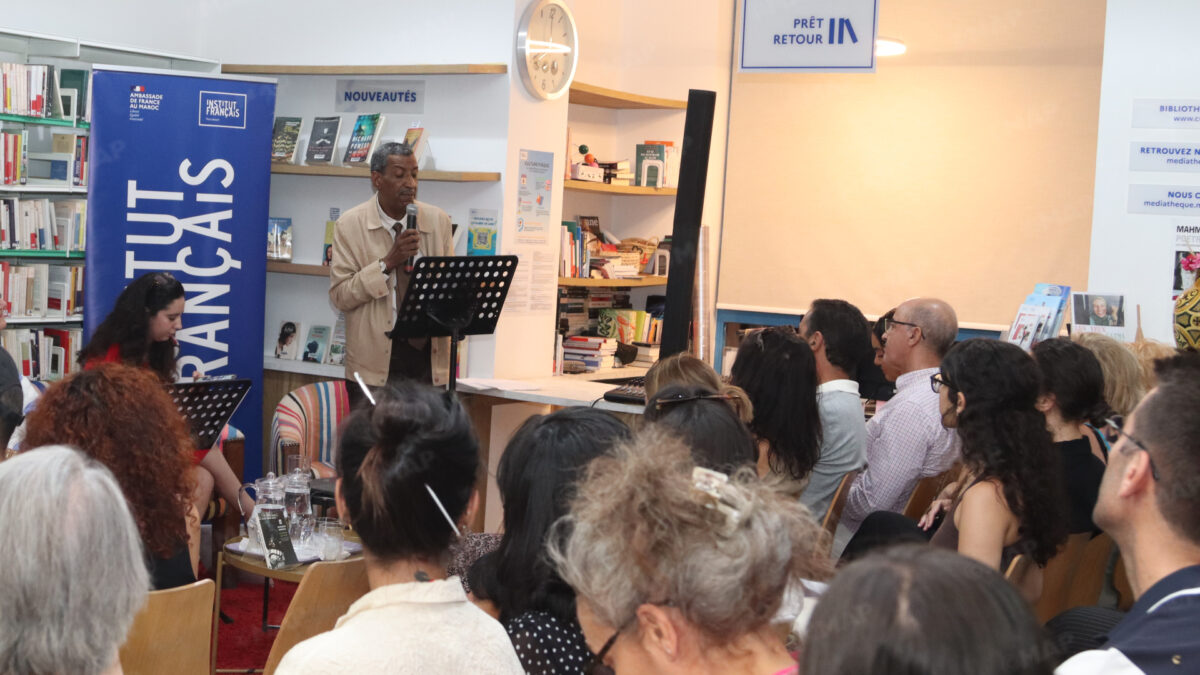
Marrakech – The French Institute of Marrakech hosted an artistic event on Saturday celebrating the poetic legacy of Mahmoud Darwish, a major figure in contemporary Arabic poetry and one of the most widely read and translated voices in Arabic literature.
The evening aimed to rediscover the work of this great Palestinian poet through a program combining bilingual poetry readings, musical interludes, and film screenings, offering multiple perspectives on a literary journey deeply marked by exile, memory, identity, and the quest for freedom.
Between the Arabic language, translation, music, readings, and film, this celebration underscored Mahmoud Darwish’s place in contemporary poetic heritage and the enduring capacity of his texts to renew reflections on land, identity, memory, and exile.
Thus, the audience was treated to a series of bilingual and Arabic poetry readings of Darwish’s most famous poems, allowing them to reconnect with the richness and musicality of his writing, while also restoring the original power of his texts and their profound connection to language.
The program was also punctuated by musical interludes, creating a dialogue between poetry and music and extending the captivating atmosphere that characterized this event dedicated to one of the great names in Arabic poetry.
In a statement to MAP, Flora Boillot, Deputy Director of the French Institute in Marrakech, emphasized that this event is part of a constellation of events organized by the Centre Pompidou around the world, paying tribute to Mahmoud Darwish, considered one of the great voices of contemporary Arabic poetry.
Ms. Boillot emphasized the importance of reintroducing the public to the work of a poet whose writing transcends borders and contexts to reach a profoundly universal dimension, notably by addressing themes that resonate far beyond his personal experience and the Palestinian context.
“Through writing that is both intimate and collective, the poet explores, in particular, exile, identity, memory, love, and attachment to the land—themes likely to touch readers from different cultures,” she noted.
For his part, researcher Samir Ouanassi stressed the richness of Darwish’s work, which is distinguished by its great musicality and its ability to combine the power of language with a profound human dimension.
“Darwish’s poetry thus lends itself particularly well to poetic recitation, allowing the voice and rhythm to convey the full emotional density of his texts and their lyrical dimension,” he observed.
The evening continued with a screening of the film “Mahmoud Darwish: And the Land, Like Language,” directed by Simone Bitton. This work offers a fresh perspective on the poet’s world and the close connections between his literary creation, his relationship to the land, and the central role of language in his work.
This event is part of “Poetry Day,” an international initiative launched by the Centre Pompidou in 2020 to reinvent the ways in which poetry is celebrated and shared.
Organized in partnership with the Arab World Institute, this edition offers a collective and contemporary tribute to Mahmoud Darwish through readings, discussions, and performances that invite audiences to revisit a body of work whose impact extends far beyond Palestinian and Arab borders.
Related articles
Dakhla Launches New Engineering School of Advanced Technologies
Dakhla – Ibn Zohr University University on Monday officially launched the academic activities of the National School of…
7th Quran Competition: Winners from 12 African Countries Honored in Fez
Fez – Reciters from 12 African countries were honored on Sunday at the conclusion of the finals of…

Breakdancing: B-Boy Billy and B-Girl El Mamouny secure their spot in the Red Bull BC One World Final in Toronto
Casablanca – B-Boy Billy and B-Girl El Mamouny won the national qualifiers for the Red Bull BC One…