
Brasilia – Morocco is a “key” partner of Brazil in terms of food security, thanks to its key role in supplying fertilizers to this global agricultural powerhouse, highlighted the Director of International Relations of the Confederation of Agriculture and Livestock of Brazil (CNA), Sueme Mori Andrade.
In an interview with MAP, Mori Andrade highlighted the “strategic and mutually beneficial” nature of strengthening agricultural cooperation between the two countries, in an international context marked by supply chain disruptions.
“Thanks to a direct maritime link via the Atlantic, Morocco guarantees both security of supply and predictability,” stressed the official in the main employers’ organization of the Brazilian agri-food industry.
Brazil, she noted, imports approximately 85% of the fertilizers it uses and, given its weight in food production, securing these inputs is “essential to Brazilian and global food security.”
Between January and September 2026, Brazil imported some 2.2 million tons of Moroccan fertilizers for $1.35 billion, up 29% compared to the first 9 months of 2025, she said, adding that Morocco is Brazil’s main supplier of phosphate fertilizers and monoammonium phosphate, representing 31% of imported volumes, compared to 25% in 2025.
According to Mori Andrade, this partnership’s importance is even more evident in facing recent international markets’ disruptions, which highlighted vulnerabilities related to supplier concentration and dependence on certain logistics routes.
Beyond fertilizers, the CNA responsible highlighted the Kingdom’s strategic positioning as a regional platform with large-scale infrastructure, such as the Tangier Med port complex, the largest port in the Mediterranean, which she considers an important logistics hub and a gateway to several African markets.
“Having a highly efficient logistics infrastructure is fundamental to ensuring supply chains’ smooth functioning, reducing operational costs, and strengthening Brazilian products in African markets’ competitiveness,” she explained, highlighting the prospects for diversification towards higher value-added segments: animal proteins, processed foods, or honey, driven by the continent’s economic and demographic growth.
Mori Andrade also noted that the partnership between Rabat and Brasília is characterized by trade intensification and a growing complementarity between the two markets. According to CNA data, agribusiness represents 93% of all Brazilian exports to Morocco, the value of which has increased from $532 million in 2021 to $1.3 billion in 2025. They reached $848 million in the first 9 months of 2026 alone.
Among the most dynamic sectors are live cattle, whose sales jumped from $11 million in 2023 to $219 million in 2025, reaching $318 million between January and September 2026, she indicated, recalling the tariff exemption measures put in place by Morocco as part of the rebuilding of its livestock, as well as the existing potential in the fields of genetics and animal reproduction.
She also highlighted the growth opportunities offered by the Moroccan market in the meat sectors, particularly certified halal, thanks to the temporary suspension of customs duties, as well as in the regular supply of cereals and oilseeds for animal feed, such as corn ($372 million in 2025), sorghum, and soybean meal.
Related articles
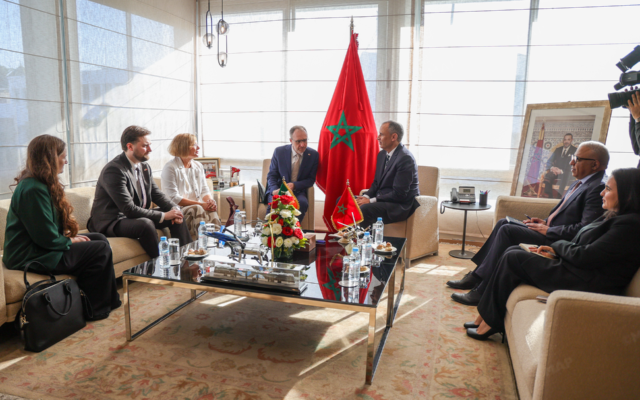
Morocco-Ireland: Mr. Mezzour and Mr. Troy Discuss Strengthening Economic and Trade Ties
Rabat – Strengthening economic and trade ties between Morocco and Ireland was the focus of talks held Monday…
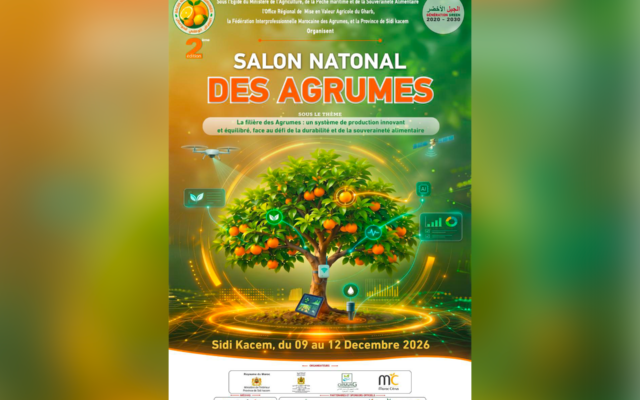
Sidi Kacem: The 2nd National Citrus Fair, December 9-12
The second National Citrus Fair will be held from December 9 to 12 in Sidi Kacem, organized by…
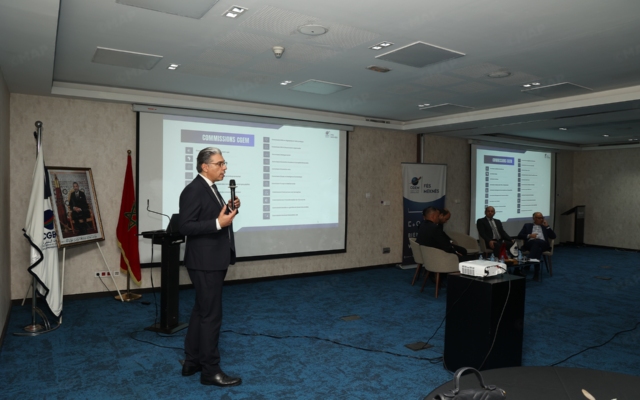
Fes-Meknes: Regional Employers’ Association Unveils New Roadmap to Boost Private Investment
Strengthening private investment, consolidating the regional industrial fabric, and improving business competitiveness are at the heart of the…