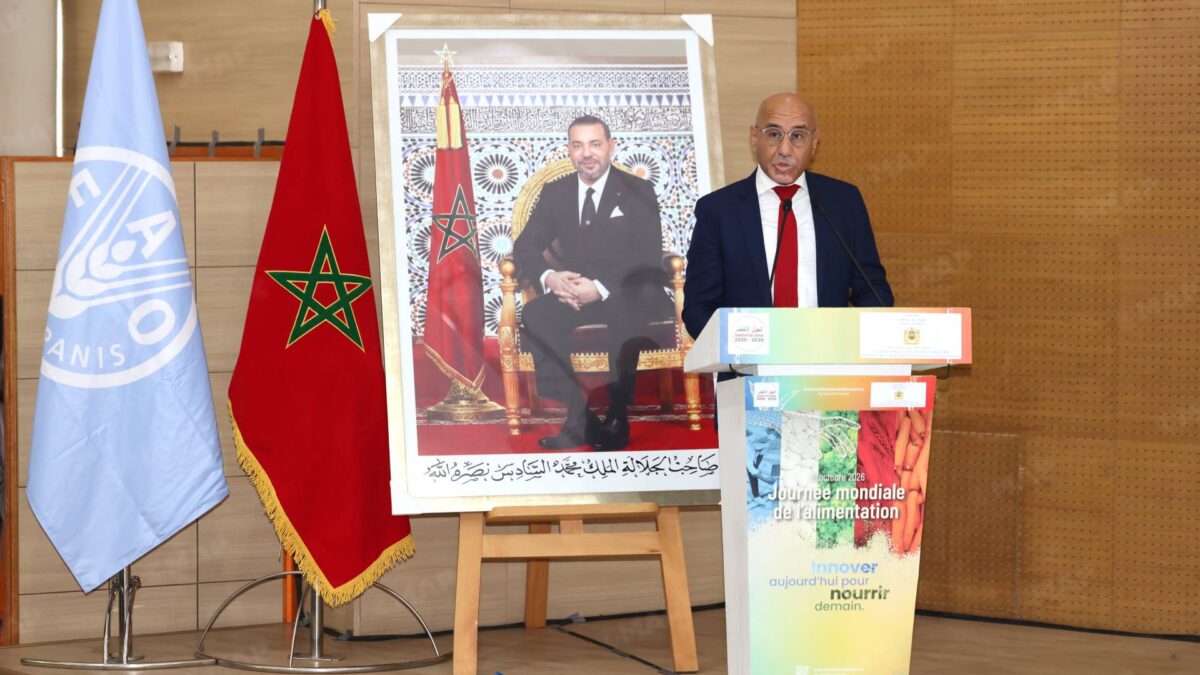
Rabat – The Minister of Agriculture, Maritime Fisheries, and Food Sovereignty, Khalid Hatimy, stated on Tuesday in Rabat that youth and innovation, whether technological, scientific, or rooted in ancestral knowledge, are the primary pathways to building the Kingdom’s food sovereignty.
Speaking at the celebration of World Food Day, organized at the Hassan II Agronomic and Veterinary Institute (IAV) by the Ministry in collaboration with the Food and Agriculture Organization of the United Nations (FAO), under the theme “Innovating Today to Feed Tomorrow,” Mr. Hatimy emphasized that “the food of tomorrow is being prepared today,” calling for the integration of science, technology, and local knowledge to create sustainable food systems.
This sovereignty, he explained, consists of feeding the population through a strong, resilient, and sustainable national agriculture, by protecting water resources and seed heritage, supporting farmers, and better promoting national products.
The minister added that “investing in our food sovereignty is investing in the dignity of our citizens, in the vitality of our territories, and in our freedom to decide our future.”
In this vein, he noted that the Kingdom is making innovation a pillar of its agriculture and food systems, particularly through the Generation Green 2020-2030 strategy, which commits to a transition towards innovative and eco-efficient agriculture.
He cited the widespread adoption of localized irrigation, the growth of conservation agriculture and no-till farming, the adoption of more resilient varieties, and the use of drones, aerial imagery, and management software for more precise farm management, noting that a national genetic research center has also been established.
Faced with climate change and water scarcity, Mr. Hatimy advocated for the proliferation of innovative initiatives, the mobilization of necessary funding, and the strengthening of international consultation and cooperation to unite “science, technology, and local knowledge in service of sustainable food systems.”
For his part, the FAO Representative in Morocco, Alexandre Anh Tài Huynh, praised “the excellent partnership established” with the Kingdom, before recalling that World Food Day is an opportunity to mobilize efforts around food security, nutritional quality, and the transformation of sustainable agri-food systems.
According to him, innovation has its greatest impact when it reaches those who need it most, particularly smallholder farmers and rural populations, who are still largely excluded from knowledge, technology, and investment.
Mr. Huynh also dedicated part of his remarks to young people, whom he called upon to be “actors, decision-makers, and innovators today,” not simply beneficiaries.
He cited as examples the “Youth of Morocco” chapter of the World Food Forum, the Agri-Accelerator project, and the women’s cooperatives supported by the Organization, seeing them as signs of “a dynamic Moroccan youth that doesn’t wait, that moves forward, that innovates.”
For the UN official, innovation is not limited to technology but also encompasses new practices, new economic models, and new forms of organization.
He cited as an example the three Moroccan sites recognized as Globally Important Agricultural Heritage Systems (GIAHS), where communities have maintained a precious balance between land, water, and biodiversity for centuries, alongside an ecosystem of Moroccan startups that are bringing digital and scientific innovations to farms.
“It is the combination of these two strengths that will yield extraordinary results” for Morocco and for South-South cooperation, he stated.
This meeting, which brought together representatives of industry professionals, public institutions, national and international partners, as well as research and training establishments, was followed by a scientific panel dedicated to the sustainable development of agri-food systems. Presentations focused on the preservation of genetic resources, the sustainability of livestock systems, the digitalization of markets, digital agricultural extension services, the training of younger generations, and the promotion of Morocco’s agricultural heritage.
The celebration was marked by the presentation of awards to several departments and institutions.
Related articles
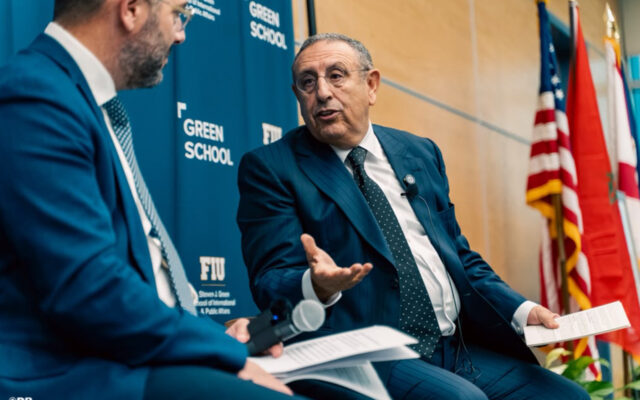
At Florida International University, Morocco Shares Its Transformation and Global Vision with US Students
Miami – During a conference at Florida International University (FIU) in Miami, Morocco’s Ambassador to the United States,…
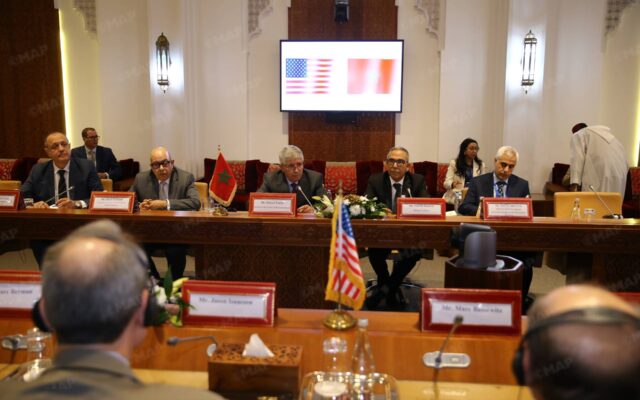
Lower House Speaker Holds Talks with AJC Delegation
Rabat – The Speaker of the House of Representatives, Ahmed Touizi, held on Monday in Rabat a meeting…
Arab Parliament Highlights Important Role of HM King Mohammed VI, Chairman of Al-Quds Committee, in Defending Palestinian Cause
Cairo – The Arab Parliament on Monday in Cairo highlighted the important role and sustained efforts of His…