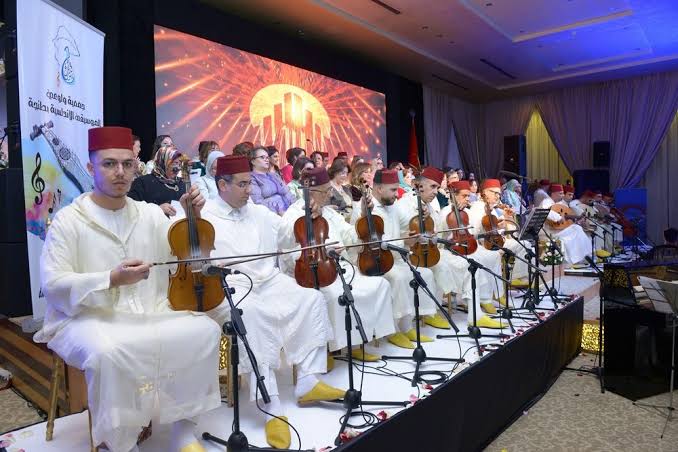
The 21st edition of the Atlantic Andalusias Festival will be held from October 29 to 31 in Essaouira. The program features 15 concerts and musical events celebrating Arab and Hebrew heritage, intergenerational transmission, and dialogues between the musical traditions of Morocco and the Mediterranean.
The Atlantic Andalusias Festival returns to Essaouira from October 29 to 31, 2026, for its 21st edition, which focuses on intercultural dialogue and the transmission of heritage. Entitled “Alif × Alef: Two Letters, One Story,” this new edition offers a program of 15 concerts and musical events that resonate with Arab and Hebrew traditions, while also opening up new creative avenues.
Through the symbols of “Alif,” the first letter of the Arabic alphabet, and “Alef,” the first letter of the Hebrew alphabet, the festival aims to highlight the historical ties between languages, cultures, and peoples. Two distinct scripts, two unique heritages, but also memories that intersect and resonate with one another. This approach continues the project initiated in 2003 by André Azoulay and led by the Essaouira-Mogador Association, with the goal of making music a space for encounters between Jewish and Muslim traditions.
Between Heritage and New Encounters
For this edition, the Festival focuses as much on the transmission of musical repertoires as on fostering new collaborations between artists. Several artists will be making their first appearance at the Atlantic Andalusias Festival, including singer Moshé Louk, nephew of Rabbi Haïm Louk, a leading voice in Judeo-Moroccan music, and Spanish dancer and choreographer Olga Pericet, a prominent figure in contemporary flamenco.
The event will also feature a highly anticipated encounter between piyut, the art of sung poetry in the Jewish tradition, and Gnawa music. Developed over several years by André Azoulay, this project will bring together the HaPiyut Ensemble and Maâlma Hind Ennaira for the closing night. This collaboration will create a dialogue between two traditions deeply rooted in Moroccan history, combining the voices of Judeo-Moroccan liturgical chant with Gnawa rhythms and sounds.
Intergenerational transmission is another central theme of this 21st edition. Discovered at previous editions when they were still teenagers, Nouhaila El Kalai and Samia El Antri will return to the festival stage, where they took their first steps. Marouane Hajji, who has become one of the leading voices of Moroccan Arab-Andalusian music, will also participate in this dynamic of cultural transmission.
Three days of musical dialogue
The opening day, Thursday, October 29, will be dedicated to a concert bringing together Moshé Louk and Marouane Hajji around the Matrouz, a musical expression of the dialogue between Jewish and Arab traditions. The evening will pay tribute to Rabbi Haïm Louk and Abderrahim Souiri, two prominent voices in the Festival’s history. Nouhaila El Kalai will then perform for the public, before a duet with Marouane Hajji focused on the theme of cultural transmission. At midnight, the HaPiyut Ensemble will extend the evening at Dar Souiri with a program dedicated to piyut.
On Friday, October 30, the Andalusian Forum will be held at Bayt Dakira, focusing on the theme “The Importance of Place, the Importance of Connection.” Artists, researchers, intellectuals, writers, and journalists will discuss the links between places of memory, cultures, and societies.
The musical program will then offer a diverse range of styles. Hamid Ajbar will present a journey through the poetry of Al-Andalus, while Mohamed Aaboud will perform Andalusian songs and repertoires associated with women’s evenings in Tangier. Guitarist Mercedes Luján will highlight the role of women in flamenco, while Shira u’tfila will recount the story of a Sephardic Haggadah woman, rescued during World War II by a Bosnian Muslim.
In the evening, Malhoun music will be featured with Majda Yahyaoui and Souhaila Sahraoui, accompanied by the Al Assala Orchestra of Meknes under the direction of Rachid Lahkim, as well as the troupe of Lhaj Saïd Berrada, a leading figure of the Issawa. This event will bring together various expressions of Moroccan musical heritage through popular songs and the concept of Tamghrabit, associated with sharing, celebration, and transmission. Samia El Antri will then return to the stage of the Atlantic Andalusias.
Related articles
The “Letters from the Maghreb” Book Fair in Oujda highlights the city’s role as a hub for cultural decentralization (official)
Rabat – The “Letters from the Maghreb” Book Fair in Oujda highlights the city’s role as a hub…

Erfoud: The 15th International Date Fair in Morocco, October 28 to November 1
Erfoud – The 15th edition of the International Date Fair in Morocco (SIDATTES) will be held from October…

Festival of Sufi Culture: Immersion in the Spiritual World of the Boutchichiya
Fez – The Samaa Al Jamal ensemble of the Qadiriya Boutchichiya Tariqa offered an immersion into the spiritual…