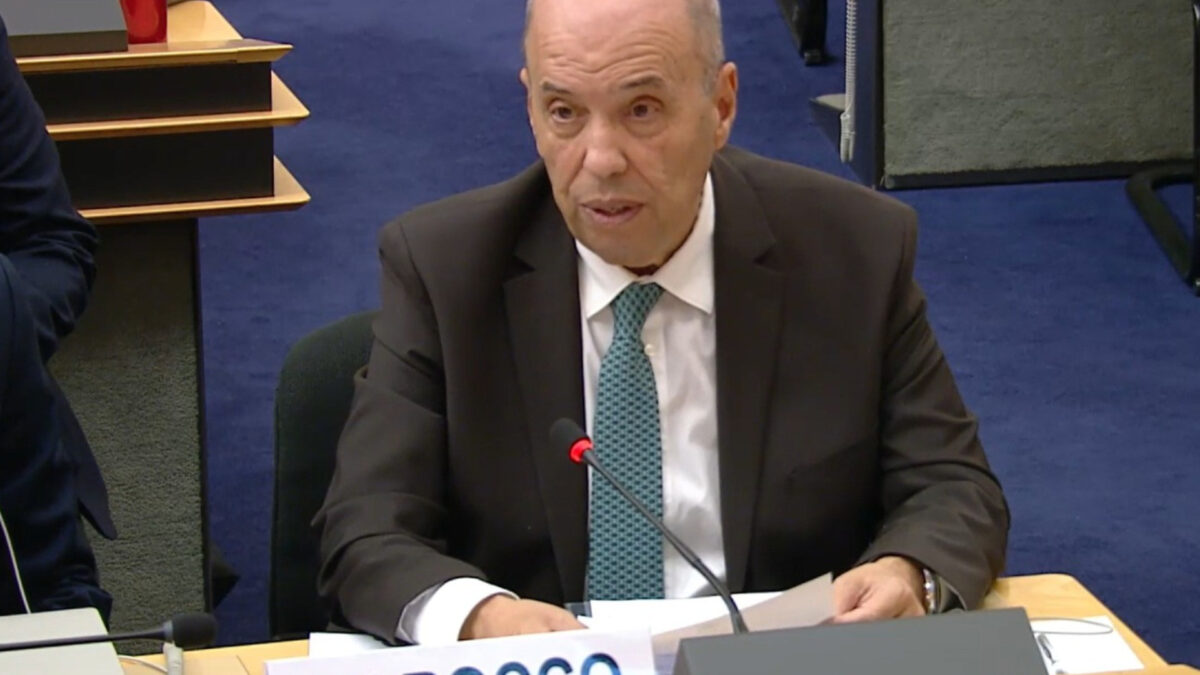
Geneva – With broad and significant support from the majority of members of the Executive Committee of the United Nations High Commissioner for Refugees (UNHCR), Morocco called on the organization’s leadership and donor states on Tuesday in Geneva to refocus their efforts on financing durable solutions for the populations of the Tindouf camps, prioritizing voluntary repatriation, integration into the host country, or relocation to third countries, based on the free and voluntary choices of the populations concerned.
This appeal was launched by the Kingdom’s Permanent Representative to the United Nations Office and other international organizations in Geneva, Ambassador Omar Zniber, during the general debate of the 77th annual session of the UNHCR Executive Committee (ExCom), where he reaffirmed the Kingdom’s support for the reformist approach of High Commissioner Barham Salih, which focuses on durable solutions as the primary driver of humanitarian action.
“The world can no longer tolerate refugee situations that drag on for decades,” he stated, noting that these crises create “unacceptable human conditions” and condemn entire generations to “live in a state of limbo, without prospects and often in extreme vulnerability.”
In this regard, he cited the case of the Tindouf camps in Algeria, which, “despite billions of dollars spent, continue to exhibit the most alarming rates of malnutrition, vulnerability, and aid misappropriation, as described in reports from the United Nations itself, and more specifically from UNHCR, as well as those from other institutions that have documented these abuses.”
These camps are entering their sixth decade this year, making it the longest-standing situation addressed by UNHCR, according to the ambassador, who sees this as “political manipulation unrelated to UNHCR’s humanitarian goals.”
He recalled that the High Commissioner had alerted the UN Security Council on September 25 to the deteriorating living conditions in the Tindouf camps and described the situation as “untenable, unsustainable, and profoundly inhumane.”
He also mentioned a letter dated September 2, 2026, addressed to the parties concerned by the High Commissioner, the Personal Envoy of the UN Secretary-General, and the Permanent Representative of the United States to the UN in New York, calling for the immediate implementation of durable solutions for the populations of the camps. This letter, he stated, “now defines the position that the United Nations as a whole intends to implement with regard to the populations of the Tindouf camps, offering them an alternative and a better future.”
In this context, the Moroccan diplomat stressed that it had become “absolutely urgent” to implement durable solutions for the Tindouf camps, an implementation now made possible by Security Council Resolution 2797, adopted on October 31, 2025, which outlines the path and means to end the regional political dispute over the Sahara issue through the implementation of autonomy.
In this regard, he recalled His Majesty King Mohammed VI’s sincere appeal to the people of the Tindouf camps to seize “this historic opportunity to reunite with their families.” The Sovereign reaffirmed that “all Moroccans are equal, and there is no difference between those who have returned from the Tindouf camps and their brothers and sisters residing in the rest of the country.”
“With the timeframe for implementing the three durable solutions clearly defined, it is now up to those responsible for this situation, which has gone on for far too long, to engage seriously and in good faith in this process,” he maintained.
The ambassador also reported on consultations conducted by the Moroccan delegation in Geneva with almost all members of the Executive Committee, indicating that they had received “expressed support, in official written form, from a significant number” of them, in favor of durable solutions in the camps, within a free and voluntary framework and in accordance with UNHCR principles.
He further added that the majority of donor states, among the main contributors to the High Commissioner’s budget, “declared themselves ready to finance the implementation of these solutions.”
“Aid should not finance the perpetuation of refugee status but the solutions it provides,” he concluded.
Related articles

Tangier Police Arrest ISIS-Affiliated Extremist
Rabat – Tangier judicial police arrested a 22-year-old extremist affiliated with the terrorist organization ISIS on Friday evening,…
Mohammed VI Foundation of African Ulema Promotes Prophetic Tradition Through Hadith Competition in Ethiopia
Addis Ababa – The preselection rounds for the third edition of the Hadith Nabawi Asharif Competition, organized by…
Vice-President of Ethiopian Islamic Affairs Supreme Council Highlights HM the King’s Interest in Sunnah in Africa
Addis Ababa – The Vice-President of the Ethiopian Supreme Council of Islamic Affairs, Sheikh Abdulkarim Sheikh Bedredin, highlighted…