
Despite the contribution of foreign direct investment (FDI) to the growth of the Moroccan economy, these have not helped improve the welfare of the population, the ADB said in a report titled “Does Foreign Direct Investment Improve Welfare in North African Countries?”
The ADB recognized that even if the impact of FDI on GDP per capita is positive, the negative correlation between FDI changes and the gross national income per capita in Morocco confirms previous findings whereby the link between FDI and welfare is inconclusive.
To reach this conclusion, the ADB studied the correlations in all North African countries between foreign investment, development of national wealth and the poverty rate or the human development index (HDI), which takes into account factors such as health, education and living standards.
The study showed that in Morocco’s case, FDI volume has sharply increased since 2000, which has certainly coincided with a reduction in the poverty level. However, the volume of FDI per capita is not correlated with poverty reduction.
In sum, although investments represent a growing share of national wealth and correspond to a concomitant reduction in the proportion of the poor, this reduction is not related to what foreign investment per capita represents.
Misplaced investments
Why does the amount of foreign investment per capita have a ripple effect on the level of poverty? For ADB economists, the FDI flowing into Morocco is too concentrated in the tertiary sector, especially in the “services and tourism industries (finance, business activities, restaurants and hotel industries).”
The ADB study categorically concluded that from 2008 to 2010, “Almost no FDI went to the primary sector in Morocco and very little FDI went into the manufacturing sector.”
Yet, the agricultural and manufacturing sectors are regarded as “labor-intensive and pro-poor sectors in developing economies,” the ADB warned. According to the ADB, the sectoral concentration of FDI could even result in further revenue inequality in Morocco. The institution recommended that Morocco channel FDI into the primary and manufacturing sectors in order to promote better wealth distribution.
al-monitor.com/MDN
Related articles
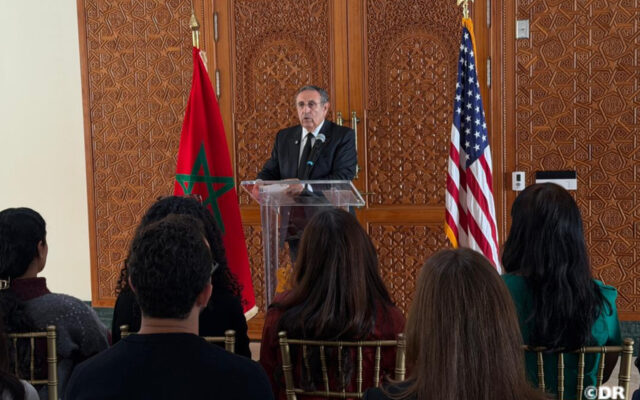
Washington: Youssef Amrani Addresses American Academics on the Latest Developments in the Western Sahara Issue
The latest developments in the Western Sahara issue, in light of recent developments at the UN Security Council,…
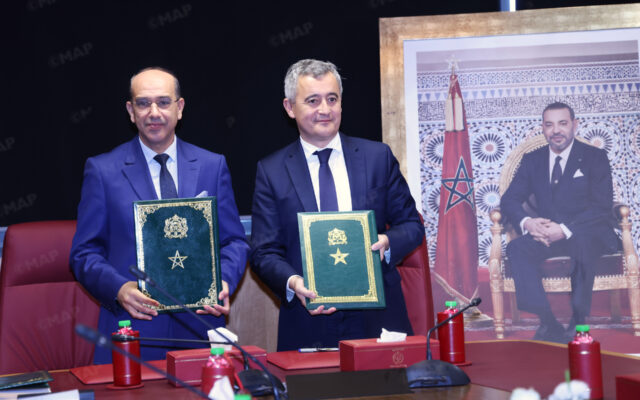
Morocco, France Seal Declaration of Intent on Legal, Judicial Cooperation
Rabat – The Presidency of the Public Prosecutor’s Office of Morocco and the French Ministry of Justice signed,…
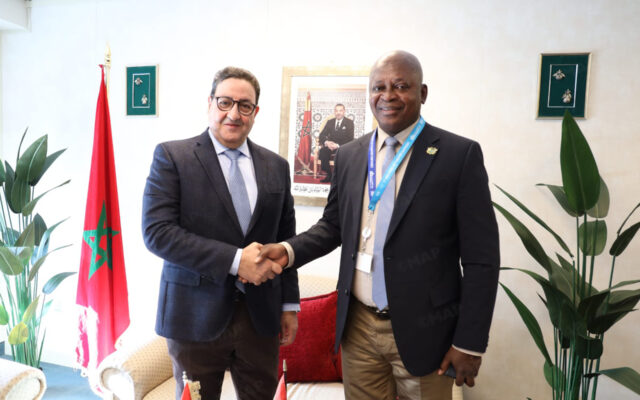
World Conference on Air Transport : Kayouh Holds Series of Bilateral Meetings
Montreal – Minister of Transport and Logistics, Abdessamad Kayouh, held a series of bilateral meetings in Montreal focused…