The Bayt Mal Al-Quds Acharif Agency, under the auspices of the Al-Quds Committee chaired by His Majesty King Mohammed VI, strengthened its healthcare interventions for the benefit of residents of Jerusalem and its surrounding areas on Sunday, expanding its free medical campaigns to include the distribution of medication, in addition to consultations, medical examinations, and early disease screening.
The Bayt Mal Al-Quds Acharif Agency, under the auspices of the Al-Quds Committee chaired by His Majesty King Mohammed VI, strengthened its healthcare interventions for the benefit of residents of Jerusalem and its surrounding areas on Sunday, expanding its free medical campaigns to include the distribution of medication, in addition to consultations, medical examinations, and early disease screening.
This initiative aims to alleviate the health and financial burden on Palestinian families, in a context marked by economic hardship and limited access to healthcare facilities.
As part of this effort, the town of Hizma, northeast of Jerusalem, hosted a free medical campaign for its residents and those of neighboring communities. The campaign included consultations in several specialties, medical tests conducted using a mobile laboratory, and the distribution of medications provided with the support of partner pharmaceutical companies.
This operation is part of the second phase of the medical campaign program implemented by the Agency, with the support of the Moroccan healthcare group AKDITAL and in partnership with Astra Lab.
Among the beneficiaries, Khadija Salahate stated that this campaign saved her the cost of travel to Ramallah as well as the expenses of consultations and medical examinations.
Having received diabetes screenings and eye exams, she welcomed this initiative, which she is benefiting from for the second consecutive year, expressing her gratitude to the Kingdom of Morocco for its support of local communities.
For his part, the Vice President of the Hizma Municipality, Jamal Al-Omari, emphasized the importance of these campaigns in a context marked by unemployment, travel restrictions, and low household incomes, many of which make it difficult for people to cover healthcare costs.
He noted that providing free medical services in local communities allows residents to receive health monitoring while reducing expenses and the constraints associated with travel.
In this regard, he commended the role of the Bayt Mal Al-Quds Acharif Agency and the Kingdom of Morocco in supporting the Palestinian people, as well as the unwavering support provided by His Majesty King Mohammed VI to the Palestinian people in various fields.
From a medical standpoint, Dr. Fadi Banoura, a member of the mobilized team, explained that patient care is based on a clinical examination, supplemented, when necessary, by tests to confirm the diagnosis.
He added that several children requiring specialized follow-up, particularly in dermatology and orthopedics, have been referred to appropriate medical facilities.
The doctor also emphasized the importance of the free distribution of medications, given their sometimes high cost relative to families’ purchasing power.
Another beneficiary, Mahdiya Salem Aïcha Abou Khalil, praised the services provided, noting that she had received, for the second time, kidney examinations, diabetes screenings, and ophthalmological consultations.
Nearly 1,250 Beneficiaries Since the Launch of Phase Two
The campaign organized in Hizma is part of the second phase of the free medical outreach program, launched on October 19 in the town of Biddu, northwest of Jerusalem, to improve access to healthcare for people living in the outlying areas of the Holy City.
Since its launch, this phase has benefited nearly 1,250 people in several localities, including Biddu, Al-Judeira, Al-Jib, Bir Nabala, Beit Hanina Al-Balad, Qalandiya Al-Balad, Jaba, Sheikh Saad, and Hizma.
The services offered include pediatrics, internal medicine, obstetrics and gynecology, and ophthalmology, as well as examinations and analyses performed using the mobile laboratory accompanying the medical teams.
In a statement, the Agency specified that this second phase follows on from the results obtained during the first stage of the program and responds to the need to maintain a local healthcare service for the benefit of the residents of the area.
Related articles
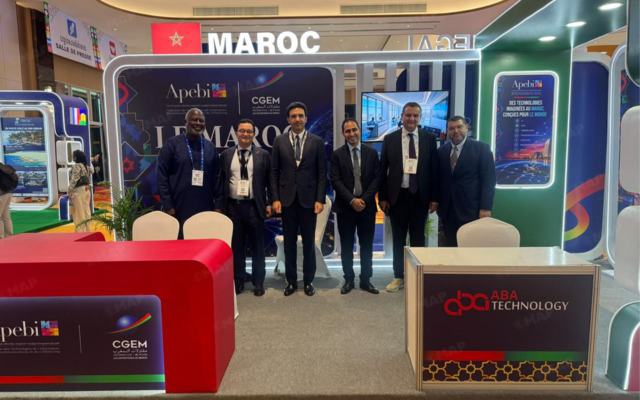
FrancoTech 2026: Morocco Showcases its Technological Offerings and International Ambitions
Phnom Penh – Morocco is highlighting its technological potential and international ambitions at FrancoTech 2026, the Francophone innovation…
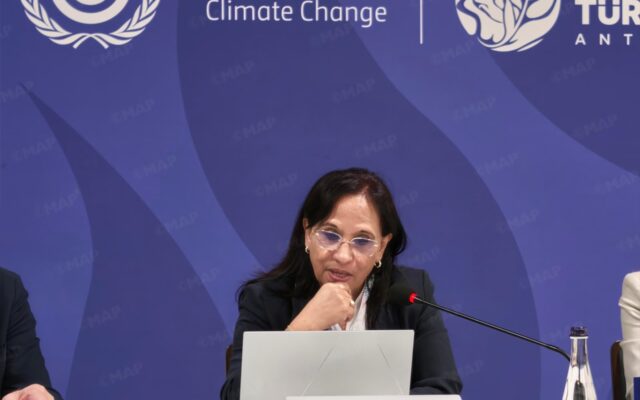
CNDH President Calls for Placing Human Rights at Heart of Climate Action
Antalya (Türkiye) – President of the National Human Rights Council (CNDH), Amina Bouayach, on Tuesday evening in Antalya…
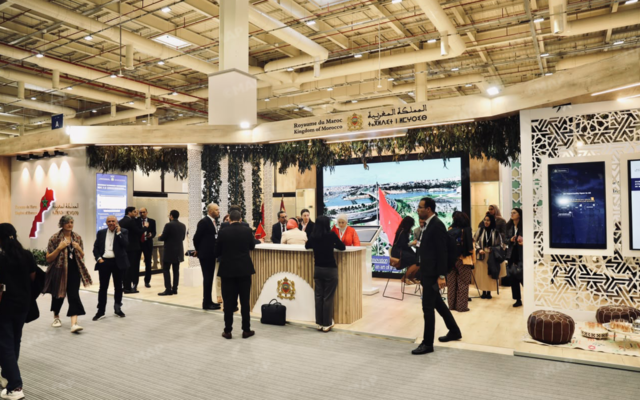
COP31: Morocco’s Pavilion, a Showcase of National Climate Action and a Platform for International Cooperation in Antalya
Antalya, Turkey – Morocco is participating in the 31st United Nations Climate Change Conference (COP31), held from November…