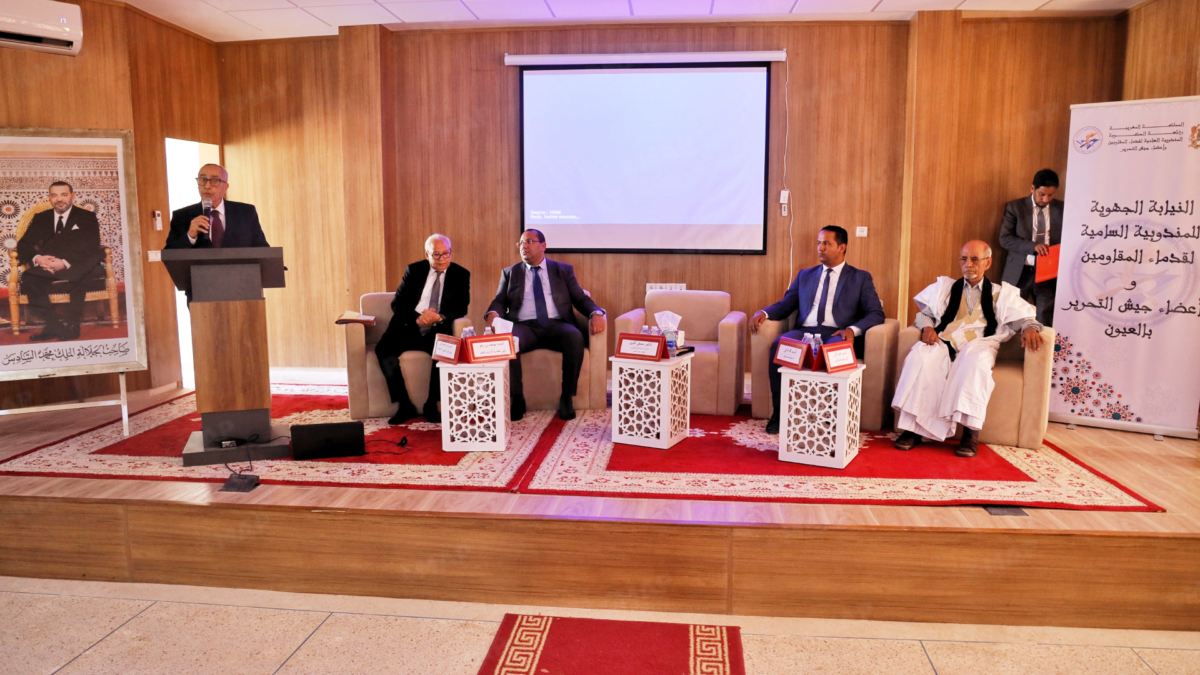
The Green March constitutes a major historical epic that demonstrated the deep commitment of Moroccans to their territorial integrity and their mobilization for the completion of national unity, affirmed Mustapha El Ktiri, High Commissioner for Former Resistance Fighters and Former Members of the Liberation Army, on Saturday in Laayoune.
Speaking at a meeting organized by the High Commission to commemorate the 51st anniversary of the Green March, Mr. El Ktiri recalled that the announcement of this popular march had generated unprecedented enthusiasm among citizens, who registered en masse to participate in this historic event, with the number of volunteers exceeding all expectations.
He emphasized that on November 6, 1975, the volunteers of the Green March set out in an atmosphere marked by order and discipline, amidst exceptional popular mobilization, before crossing the borders that had separated the southern provinces from the rest of the Kingdom for decades.
This epic journey, widely covered by national and international media, culminated in the departure of the last foreign soldier from the Moroccan Sahara on February 28, 1976, and the raising of the national flag in the skies above Laâyoune, prior to the recovery of the Oued Eddahab province, he recalled.
Since then, the southern provinces have experienced dynamic development in the areas of infrastructure, the economy, social welfare, culture, tourism, the environment, urban planning, and human development, he continued.
Furthermore, Mr. El Ktiri highlighted the community-based approach adopted by the High Commission for Former Resistance Fighters and Former Members of the Liberation Army in the social sphere, through the organization of meetings with family members to address their concerns and improve the quality of social, health, and human services provided to them.
In this context, he noted the efforts made to ensure comprehensive coverage of health and social services, as well as to ensure rigorous monitoring of beneficiary data, particularly regarding deaths and the transfer of benefits to widows.
In addition, he reviewed the actions undertaken to promote the economic and social integration of the descendants of former resistance fighters and former members of the Liberation Army, through the organization, in 2026, of three awareness-raising meetings that benefited 88 project leaders, as well as two training sessions for 72 beneficiaries.
Since 2001, support and guidance initiatives have led to the creation of 11 cooperatives, 5 associations, and 527 economic projects, generating over 820 jobs.
In this same spirit, this event, attended by members of the Resistance and Liberation Army families, as well as elected officials and civil society leaders, saw the distribution of 77 financial grants totaling over 2.16 million dirhams, including 74 grants specifically for the creation of economic projects.
The event also included a tribute to 13 former Resistance fighters and former members of the Liberation Army, in recognition of their patriotism, sense of responsibility, and spirit of sacrifice and selflessness in service of the Kingdom’s freedom, independence, and unity.
This gesture of recognition is part of a tradition of loyalty and gratitude towards the men who contributed to the national struggle, alongside the material aid given to former resistance fighters, former members of the Liberation Army, as well as to the widows and beneficiaries of the deceased.
Related articles
Moroccan Sahara: Romania Reiterates Support for Autonomy Plan as Most Adequate Basis for Definitive Solution
Rabat – During a telephone conversation on Tuesday with Minister of Foreign Affairs, African Cooperation and Moroccan Expatriates…
“Power Export” Program: 535 Applications Registered for Export Support (Minister)
Rabat – Some 535 applications have been registered under the “Power Export” program, designed to support Moroccan companies…
Positive Developments Surrounding UN Vote Reflect Two Decades of Morocco’s Diplomatic Efforts – French Jurist
Paris – The positive developments on the Moroccan Sahara issue following Friday’s UN vote come as no surprise…