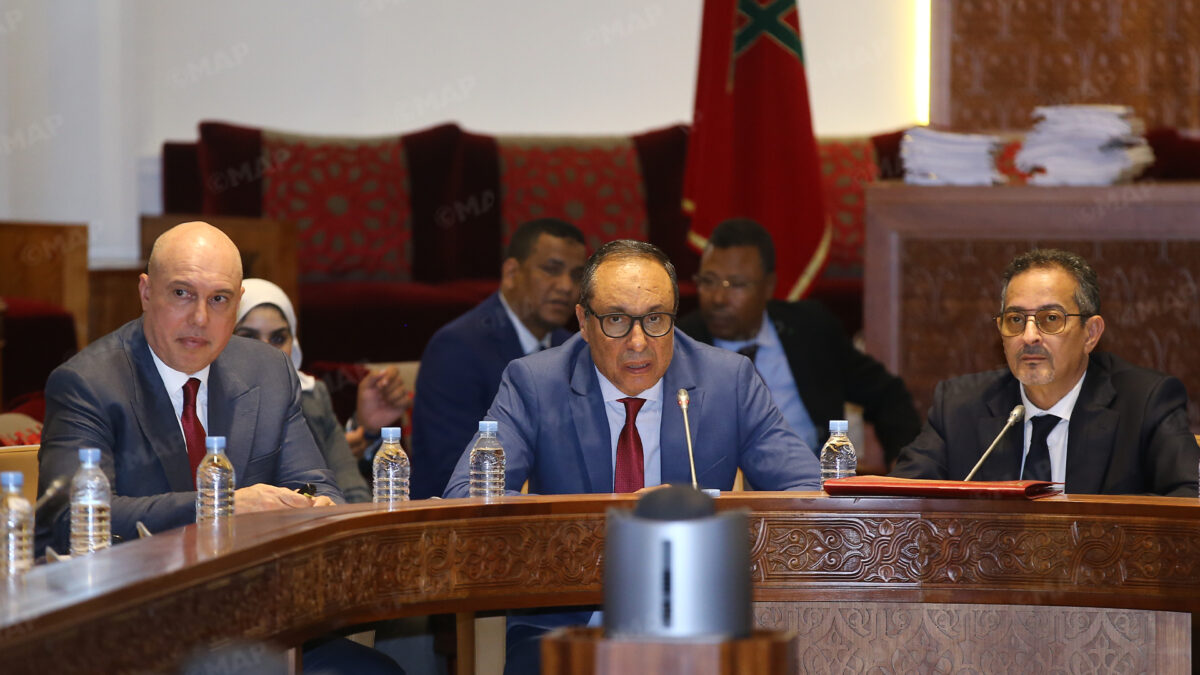
Rabat – The President of the Economic, Social and Environmental Council (CESE), Abdelkader Amara, affirmed on Tuesday in Rabat that the Council is continuing its efforts towards a responsible digital transformation, leveraging technology to improve the quality of its advisory output, broaden citizen participation, strengthen institutional efficiency, and optimize resource use.
Presenting the Council’s draft budget for the 2027 fiscal year to the Finance and Economic Development Committee of the House of Representatives, Mr. Amara explained that this approach is based on accelerating the digital transformation and the digitization of procedures. This includes digitizing the processes for drafting opinions and reports, as well as administrative procedures, in order to reduce processing times, simplify procedures, and enhance transparency and traceability.
He also reported on the increased use of artificial intelligence to improve institutional performance through the adoption of smart solutions designed to support research, analysis, and content production, while leveraging the Council’s knowledge base.
This approach also includes the development of virtual assistants and chatbots on digital platforms, as well as the use of avatars, to modernize communication methods and strengthen interactions with citizens.
The President of the EESC further emphasized that the Council is working to promote digital participation through the modernization of interactive platforms, the expansion of citizen and youth participation, and the improvement of the reliability and quality of contributions, the results of which will be used in the Council’s work.
This approach, he continued, is accompanied by a strengthening of digital sovereignty and cybersecurity, notably through better protection of sensitive systems and data, ensuring the continuity of digital services, and improving resilience to cyber risks.
It also encompasses the adoption of a secure and flexible hybrid cloud infrastructure, through the modernization of equipment and technological systems using solutions tailored to national requirements, in order to improve service availability and continuity while streamlining operating costs. This also includes the implementation of an integrated data management system and intelligent dashboards designed to support decision-making, measure performance, and improve activity monitoring.
Addressing the priorities of the consultative action, Mr. Amara presented a series of recommendations addressed to the Department of the Head of Government on “priority development issues, both immediate and prospective, for 2026,” with a view to supporting a new development cycle that places the citizen at the heart of its concerns.
These recommendations, he explained, aim to guide public policy priorities toward concrete results by guaranteeing dignified living conditions and protection against insecurity and risk at all stages of life, while promoting capacity building and expanding opportunities for learning, employment, and participation for all.
They also focus on building a more productive and diversified economy that creates value and quality jobs, strengthening sovereignty and resilience, preserving natural capital, reducing disparities and ensuring equitable access to development opportunities for all territories, and implementing more effective, integrated, and responsive public action.
Furthermore, Mr. Amara indicated that the Council’s action plan for 2027 includes completing the work initiated in 2026, whether it stemmed from formal requests or self-referrals.
Four self-referrals are thus involved, respectively concerning “contractual agreements between the State and the regions,” “sustainable management of fisheries resources in Morocco,” “transformations of the national media system in the digital age,” and “new dynamics of youth.”
Related articles
Morocco, Ecuador Seek to Strengthen Cooperation in Tourism Sector
Rabat – The strengthening of cooperation in the tourism sector was at the center of talks held on…
Employment and social dialogue priorities at the heart of a meeting between the CGEM and the Minister of Employment and Social Dialogue
Casablanca – Employment, professional integration, companies’ recruitment needs, and the priorities of tripartite social dialogue were the focus…

Morocco Establishes Itself as a Major Partner for the Ecomondo Trade Fair (Organizers)
Rimini, Italy – Morocco has established itself as a major partner for Ecomondo, the leading trade fair for…