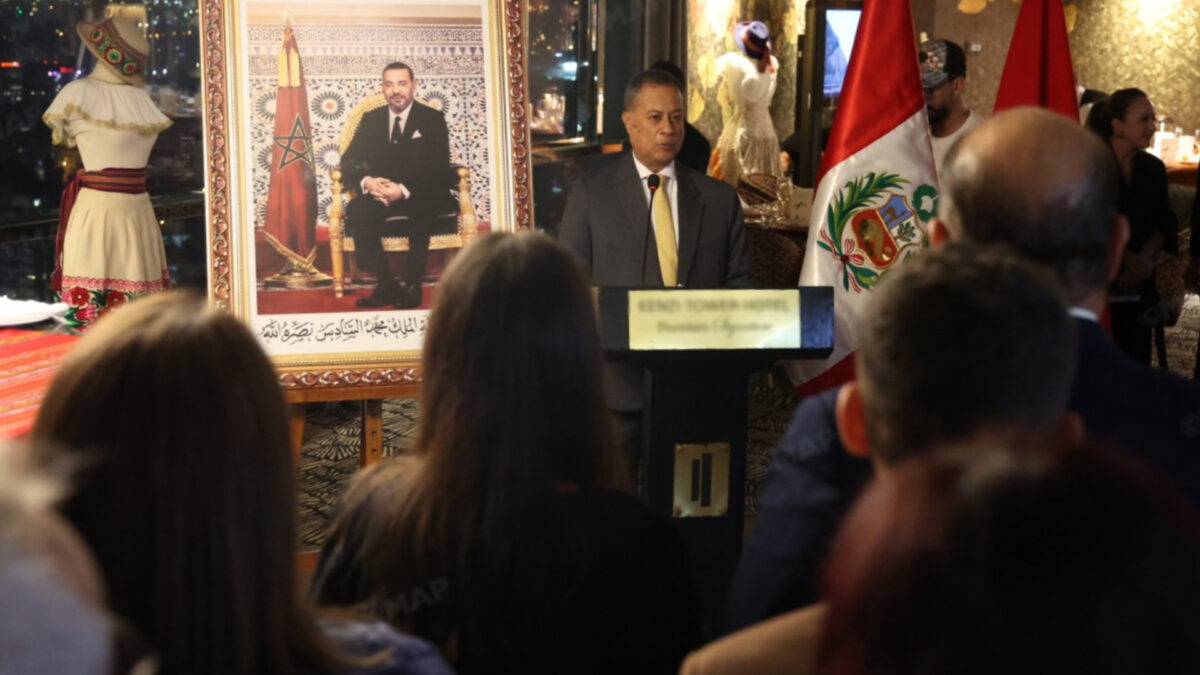
Casablanca – The 8th edition of the Peruvian Gastronomic Festival opened Wednesday evening in Casablanca, an initiative of the Peruvian Embassy in Morocco, inviting the public to discover the richness and diversity of the culinary and cultural traditions of this South American country.
Under the theme “Between Flavors and Traditions: A Journey to the Heart of the Diversity of Peruvian Gastronomy Arrives in Casablanca,” this edition, which runs until October 17, highlights “Criolla” cuisine, originating from the Peruvian coast, through a selection of iconic dishes revisited for the occasion.
Speaking at the opening, the Peruvian Ambassador to Morocco, Luis Alberto Castro Joo, emphasized that this festival contributes to strengthening ties between Morocco and Peru, two countries rich in millennia-old cultural heritage, by fostering dialogue and cultural exchange through gastronomy.
The diplomat highlighted the growing international renown of Peruvian cuisine, notably recalling the inscription, in December 2023, of the practices associated with the preparation and consumption of ceviche on UNESCO’s Representative List of the Intangible Cultural Heritage of Humanity.
For his part, Peruvian chef Julio Castillo stated to MAP that the festival offers a six-course menu, created primarily using typical Peruvian products, including ají amarillo, rocoto peppers, and Peruvian corn, with a special focus on “seco” from the north of the country, a dish whose preparation, he said, shares similarities with that of Moroccan tagine.
He also specified that the menu includes a selection of traditional desserts, notably Peruvian alfajores, passion fruit mousse, and lúcuma cheesecake, made with Peru’s emblematic fruit, allowing guests to discover different facets of the country’s cuisine.
Beyond gastronomy, this edition of the festival also offers a cultural program featuring traditional dances from various regions of Peru, as well as the photographic exhibition “Portraits of My Blood” by artist David Díaz, dedicated to the daily life of the Shipibo-Konibo people, who live in the Peruvian Amazon.
Related articles

DGSN, FNM Sign Partnership Agreement to Safeguard Cultural, Civilizational Heritage
Rabat – The Director General of National Security and Territorial Surveillance (DGSN-DGST), Abdellatif Hammouchi and the President of…
Morocco’s Balaoui Highlights Challenges of AI in Justice System
Rabat – Hicham Balaoui, the King’s Prosecutor General at the Court of Cassation and President of the Public…
ANLCA Focuses on More Effective Programs with a Concrete Impact
Rabat – The National Agency for the Fight Against Illiteracy (ANLCA) is dedicating a strategic focus to developing…