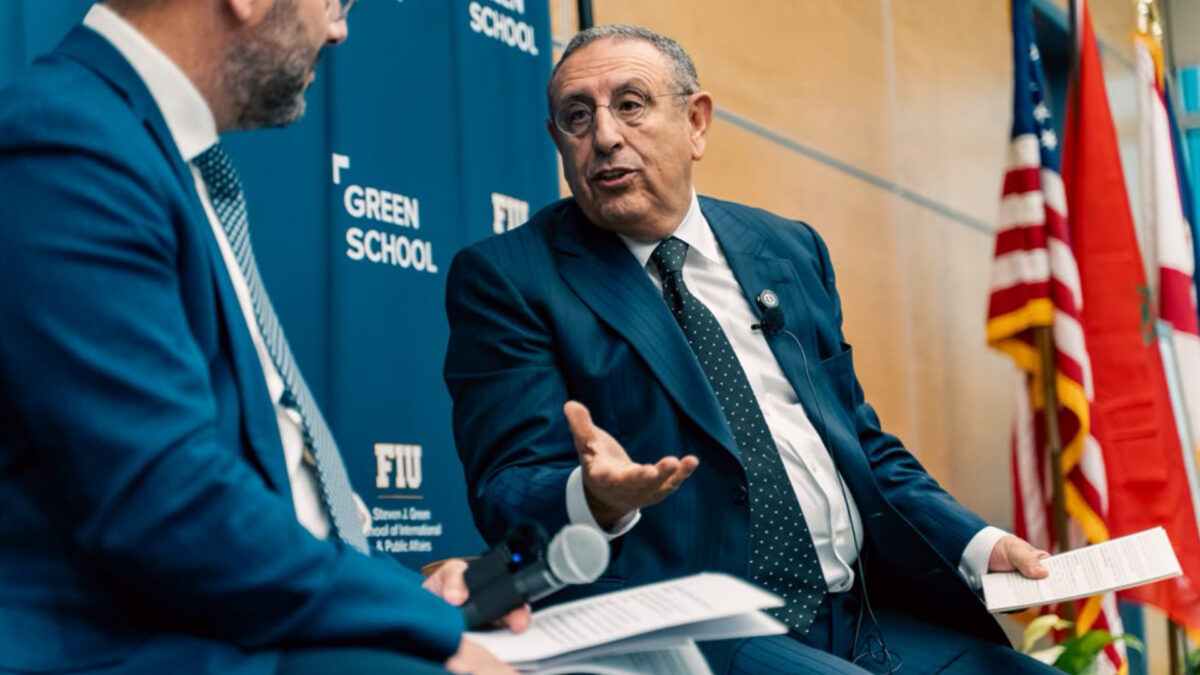
Miami – During a conference at Florida International University (FIU) in Miami, Morocco’s Ambassador to the United States, Youssef Amrani, emphasized that the Kingdom, far more than a crossroads between continents, seeks to “contribute to solutions, seize opportunities, and take its rightful place in the major transformations shaping the world.”
“Our geography has shaped our history, but it does not define the limits of our ambition. Morocco aspires to be much more than a crossroads between continents: it wants to contribute to solutions, seize opportunities, and play its full part in the major transformations shaping the world,” Mr. Amrani told an audience of students, academics, and faculty members at FIU.
During this conference, held recently at the “Steven J. Green School of International & Public Affairs” and moderated by its dean, Dr. Shlomi Dinar, the ambassador presented Morocco’s key policy directions, its role on the international stage, and the prospects for developing the Moroccan-American partnership.
A Morocco True to Its Identity and Looking to the Future
When asked what distinguishes Morocco in a rapidly changing world, Mr. Amrani stressed that the Kingdom has turned its geographic position at the crossroads of Africa, Europe, the Arab world, and the Atlantic into an asset for dialogue, openness, and cooperation.
“Under the leadership of His Majesty King Mohammed VI, this openness has gone hand in hand with a profound economic transformation, the development of modern infrastructure, and investment in industry, energy, and education,” he said.
The meeting was also part of the inaugural edition of “Morocco Days in Miami,” held from October 22 to 24 at the initiative of the Consulate General of the Kingdom of Morocco in Miami.
“Morocco does not choose between tradition and modernity. It embraces both,” the ambassador said, noting that a strong attachment to national identity is an asset in preparing for the future.
He also highlighted the growing role of women in this transformation, noting that their presence in universities, businesses, research, and public institutions reflects broader changes in Moroccan society.
“One cannot understand today’s Morocco without understanding the role women play there. The appointment of Fatima Ezzahra El Mansouri as head of the Moroccan government marks a historic milestone in Morocco’s institutional evolution,” he said.
An Economy Focused on Global Markets
“This transformation is also reflected in a clear economic ambition: to make Morocco a hub for production, investment, and value creation, connecting markets and participating in major global value chains,” the ambassador said.
In a context where companies are seeking reliable partners, efficient infrastructure, and secure supply chains, the Kingdom possesses significant strengths, he added, emphasizing that these strengths open up new opportunities with the United States.
Making Development a Driver of Regional Stability
Addressing major international challenges, Mr. Amrani outlined the principles guiding Moroccan diplomacy: “clear positions, commitments honored, and lasting partnerships.”
“Amid crises and geopolitical tensions, Morocco upholds a simple conviction: stability cannot be sustained without economic development, regional cooperation, and opportunities for people,” he said.
This approach is reflected, in particular, in the Kingdom’s engagement in Africa and in the Royal Initiative aimed at facilitating access to the Atlantic Ocean for the countries of the Sahel. The goal is to transform geographical isolation into an economic opportunity by facilitating interconnections and offering these countries new avenues for access to international markets, the ambassador said.
Miami: A Bridge Between Morocco, the United States, and the Atlantic
The ambassador noted that the shared ambition of Morocco and the United States is to make the excellence of their political and strategic relations “an ever-more-powerful engine of shared economic prosperity.”
In this regard, he highlighted the role that South Florida can play in bringing the two countries closer together, given that Miami serves as a gateway to Latin America and the Caribbean, while Morocco offers privileged connections to Africa, Europe, and the Atlantic region.
This complementarity opens up concrete opportunities for economic cooperation, he noted, adding that the direct flight between Casablanca and Miami, as well as the sister-city agreement signed in 2025 between Miami-Dade and Casablanca-Settat, can foster new projects in trade, logistics, tourism, innovation, and economic exchanges.
Nurturing a New Generation Open to the World
In response to students’ questions about the future of diplomacy, the ambassador noted that diplomacy is no longer limited to relations between governments. It is also forged within businesses, universities, research laboratories, and the sectors that shape the global economy.
“Governments can sign agreements, but it is the women and men we are educating today who will bring those agreements to full fruition tomorrow.”
“Nearly 250 years after recognizing American independence, Morocco intends to continue and strengthen this special relationship. The goal is clear: to transform an exceptional historical legacy into new opportunities for cooperation, growth, and progress for the benefit of both peoples,” the ambassador concluded.
Related articles
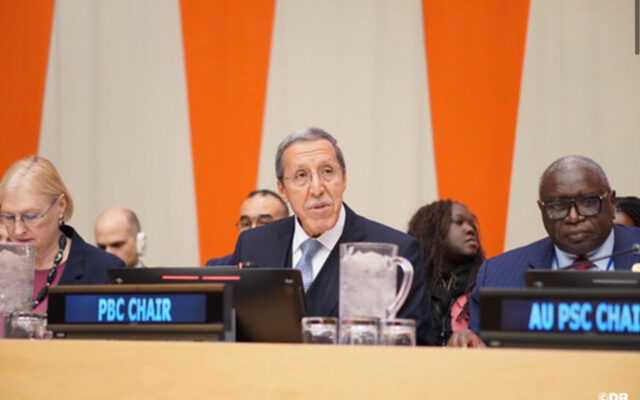
Omar Hilale: “Morocco, a Bridge Between UN, AU for African-led Peace”
United Nations (New York) – Ambassador and Permanent Representative of Morocco to the United Nations, Omar Hilale, co-chaired…
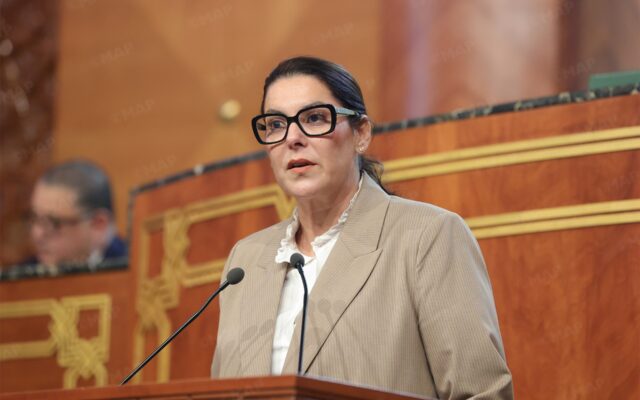
Government Will Adopt Concrete Measures Backed by Figures, Real Funding to Implement Its Program – Gov’t Head
Rabat – The government will adopt concrete, effective, and realistic measures, backed by figures and real funding to…
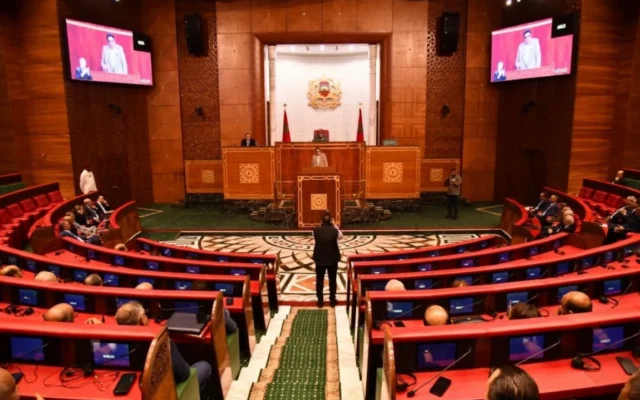
House of Councillors: Majority Defends Government Program Priorities
The majority groups in the House of Councillors welcomed the government program’s guidelines on Wednesday, while calling for…