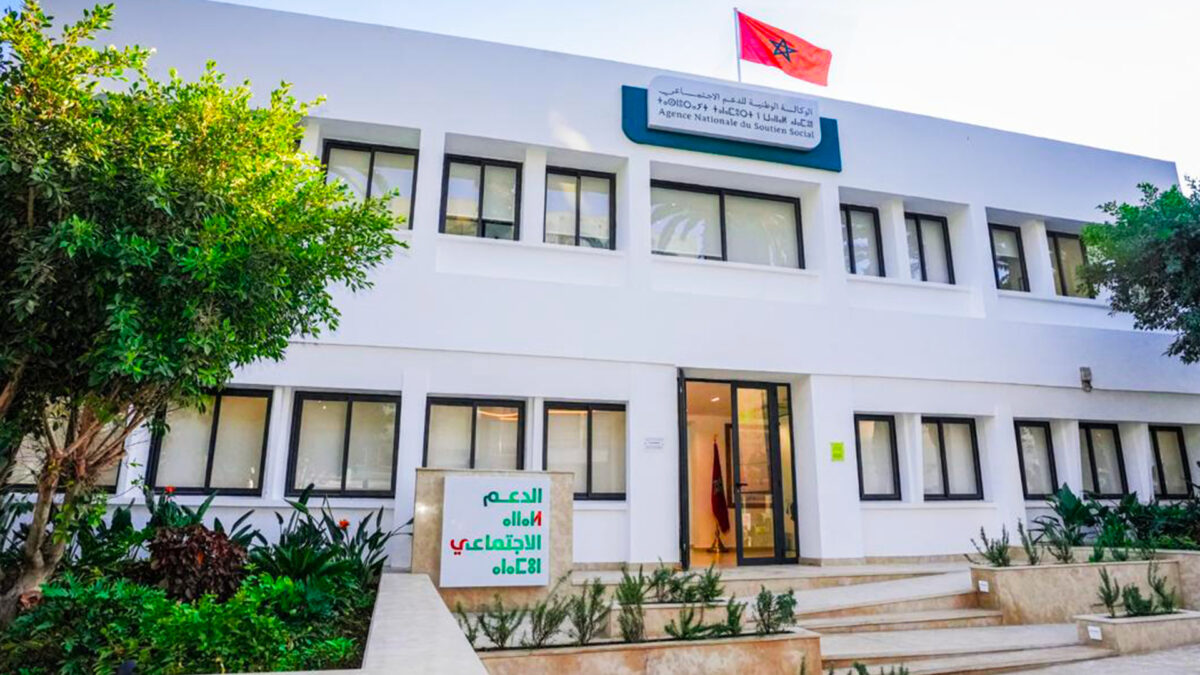
Rabat – The National Social Support Agency (ANSS) has announced the disbursement of the first installments of the exceptional bonus to households receiving Direct Social Assistance (ASD) where the head of household or one of the spouses has started a declared activity registered with the National Social Security Fund (CNSS).
This disbursement is part of the ongoing implementation of the High Directives of His Majesty King Mohammed VI, may God assist him, aimed at consolidating the foundations of the welfare state and strengthening social protection mechanisms for citizens, ANSS stated in a press release.
The National Social Security Agency (ANSS) invites beneficiaries of the ASD program who wish to access formal employment to register for the exceptional bonus designed to encourage formal professional integration, according to the press release. Applications for this bonus can be submitted via the online portal www.asd.ma.
Since the implementation of this mechanism, in accordance with the provisions of Law No. 041.26 amending and supplementing Law No. 58.23 relating to the ASD system, more than 1,970 applications have been registered, of which 1,460 have been approved, representing an acceptance rate of 74%, notes the ANSS, adding that half of these beneficiaries reside in rural areas.
“Law No. 041.26 has indeed established two new mechanisms to support beneficiary households in their transition to the formal labor market: the first consists of granting this exceptional bonus, while the second allows for the immediate reinstatement of the ASD (Supplementary Unemployment Benefit), without waiting for a 12-month period,” the Agency emphasizes.
The amount of the exceptional bonus is equivalent to the amount of the assistance corresponding to the household’s situation under the ASD scheme, the statement explains, adding that it is paid for a period of twelve months, continuous or discontinuous, from the date of registration of the head of household or one of the spouses with the social security system.
As for the second mechanism, it offers beneficiary households, in the event of the loss of the declared employment of the head of household or one of the spouses, the possibility of immediately regaining their ASD benefits, without being subject to the twelve-month waiting period stipulated in Article 7 of Law No. 58.23.
These two measures address a problem that has become apparent in practice since the implementation of the ASD (Aid for Social Development): some beneficiary households were hesitant to enter the formal labor market for fear of losing their eligibility for assistance upon registering with the CNSS (National Social Security Fund).
According to the press release, this measure is perfectly aligned with the results of a field study conducted by the ANSS (National Social Security Agency) among program beneficiaries, revealing that 60% of them are willing to forgo assistance in exchange for stable employment, while 40% express a desire to receive support for professional integration or to launch an income-generating activity.
The National Social Security Agency (ANSS) adopted a statistical segmentation approach for beneficiaries of the Social Solidarity Allowance (ASD), highlighting three categories with the potential for socioeconomic integration to sustainably escape poverty and vulnerability: Emerging Households (1,209,436 households), Households in Transition (986,265 households), and Individuals Living Alone Without Support (156,936 people). Targeted by the exceptional allowance, these clusters represent more than 60% of all households receiving ASD and account for 84% of the beneficiaries of the exceptional allowance as of the end of October 2026.
The exceptional allowance aims to provide a transitional financial safety net for the households concerned during their integration into the formal labor market, thus preventing any sudden loss of income, according to the same source. It adds that this allowance also aims to guarantee the continuity of their social protection in order to consolidate their path to economic and social autonomy.
The Agency also reminds households receiving ASD benefits that they can check their eligibility for the exceptional bonus through its official communication channels.
Related articles
Errachidia: The CPDH includes 53 projects for socio-economic vocation
The Provincial Comité of Human Development (CPDH) of Errachidia approved, at the March 2019 reunion, 53 projects for…
On His Majesty the King’s High Instructions, Mohammed VI International University Hospital Complex Inaugurated in Dakhla
Dakhla – On the High Instructions of His Majesty King Mohammed VI, may God assist Him, the Minister…

Fahs-Anjra: Raising Parental Awareness of Supporting Children with Disabilities
Anjra Municipality – A training and awareness workshop was held on Monday at the Khmis Anjra Center for…